
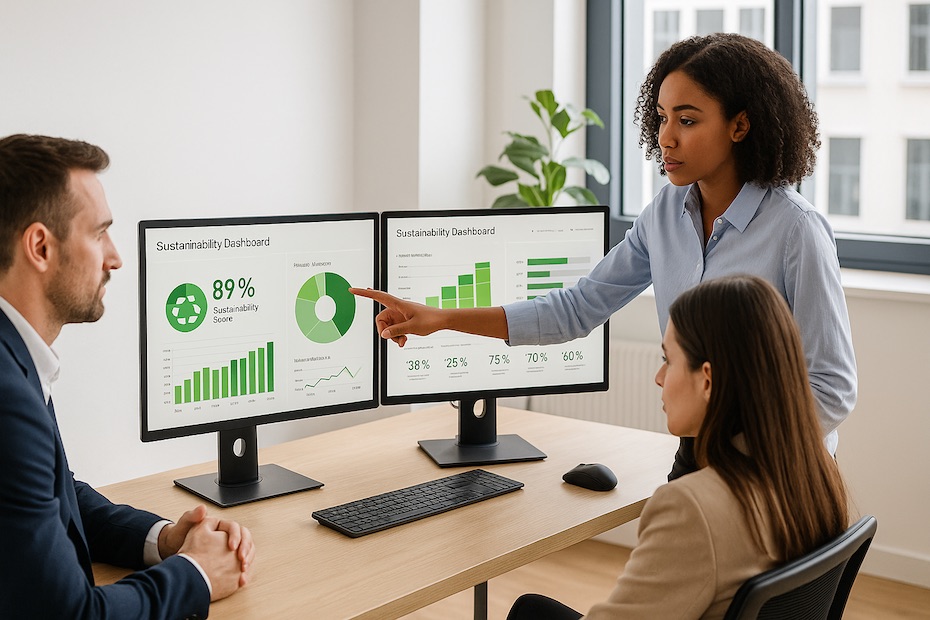
The best free resources to help your business go green include government toolkits, NGO sustainability programs, online training, and carbon-tracking tools that reduce waste and save money.
You don’t need a massive sustainability budget to start running an environmentally responsible operation. You need the right free tools and data-driven guidance to make smarter decisions. In this article, you’ll discover ten proven free green resources that empower you to measure, manage, and accelerate your sustainability journey—from reducing emissions to optimizing energy efficiency.
1. EPA Energy and Waste Reduction Tools
The U.S. Environmental Protection Agency (EPA) provides a suite of free sustainability resources that help businesses manage waste, water, and energy use. Through its Energy Star for Small Business program, you can access step-by-step guides on improving lighting efficiency, reducing HVAC load, and minimizing waste streams.
The EPA’s Waste Reduction Model (WARM) also lets you estimate greenhouse gas savings from recycling, composting, and reusing materials. With these calculators, you can quantify environmental benefits and identify high-impact areas for improvement.
Many organizations use these tools to establish their first sustainability baseline—without hiring external consultants. Once you integrate them into your annual reporting, you’ll have measurable proof of energy and cost savings to share with stakeholders.
2. SBA Sustainable Business Practices Toolkit
The U.S. Small Business Administration (SBA) offers free sustainability resources specifically for entrepreneurs and small business owners. Its Sustainable Business Practices Toolkit includes guides, templates, and self-assessment checklists that cover topics like waste reduction, green purchasing, and supply chain optimization.
This resource is particularly valuable if you’re transitioning from compliance-focused operations to performance-driven sustainability. You’ll find templates for sustainable procurement, environmental policy drafting, and staff training plans.
By embedding SBA’s recommendations into your operations, you align cost management with environmental responsibility—a combination that strengthens both profit margins and brand equity.
3. WRAP Circular Economy Business Library
If you want to adopt circular economy principles, WRAP (Waste and Resources Action Programme) is a must-use resource. Based in the UK but applicable globally, WRAP provides case studies, design toolkits, and modeling templates to help you close the loop on materials and manufacturing.
You can learn how to reuse packaging, recover waste materials for resale, and collaborate with suppliers to minimize production waste. Many SMEs have used WRAP’s free reports and data tools to cut disposal costs and open new revenue streams through product take-back schemes.
Circularity not only reduces waste—it generates new value streams that transform how your business competes.
4. Free Carbon Footprint Calculators
Accurate measurement is the foundation of sustainability performance. Several platforms—including Carbon Trust, CoolClimate Network, and Climate Neutral Now—offer free carbon calculators that estimate emissions from energy, travel, logistics, and product manufacturing.
These tools help you benchmark your emissions and simulate reduction scenarios. You’ll see how different energy sources, supply chain decisions, or shipping methods influence your carbon output.
By starting with free calculators, you can build internal awareness and data literacy before investing in paid sustainability software. This step transforms environmental performance into a measurable business metric.
5. Non-Profit Audits and Self-Assessment Programs
Non-governmental organizations (NGOs) and industry associations provide free sustainability audits and self-assessment tools to help you evaluate your operations. Programs like the Federation of Small Businesses (FSB) sustainability guide and the Global Reporting Initiative (GRI) tools are great starting points.
These programs walk you through core sustainability areas: energy, water, waste, procurement, and employee engagement. You’ll receive structured recommendations that are simple to implement and easy to measure.
Self-assessment tools are particularly useful if you plan to pursue certifications later, as they build internal discipline around reporting and tracking.
6. Government and Local Energy Efficiency Programs
Your city or regional government likely offers free sustainability audits, rebates, or advisory programs. Many states have energy efficiency agencies or partnerships that send experts to evaluate your facility and provide no-cost recommendations.
For instance, ENERGY STAR Portfolio Manager allows businesses to benchmark energy and water use across buildings for free. Some local utilities also provide tools for real-time energy tracking or cost-saving retrofit programs.
When you integrate these into your facilities management, you’ll often uncover double-digit reductions in consumption that directly improve your operating margin.
7. Open-Access Sustainability Courses and Webinars
You can access world-class sustainability training without spending a cent. Platforms like Coursera, edX, and FutureLearn offer free audit versions of sustainability and green innovation courses from top universities.
Major corporations like Google, Microsoft, and Unilever also sponsor free webinars on decarbonization, sustainable supply chains, and ESG reporting. These sessions provide direct access to the latest tools and strategies that executives across industries are using.
Integrating these into your team’s professional development not only upskills employees—it builds a culture of environmental accountability across departments.
8. Sustainability Reporting Templates from Industry Bodies
Industry associations and sustainability groups like CDP (Carbon Disclosure Project) and BSR (Business for Social Responsibility) publish free ESG and sustainability reporting templates.
These templates standardize how you measure and communicate environmental performance. You can use them to align with investor expectations, supplier scorecards, or internal KPI dashboards.
By leveraging free templates early, you build confidence in data collection and avoid common reporting errors that delay progress. It’s an efficient way to prepare for mandatory sustainability disclosures or partner requirements.
9. Online Green Business Communities and Knowledge Hubs
Sustainability success accelerates when you connect with others pursuing similar goals. Free online communities like Sustainable Brands Connect, Reddit’s r/Sustainability, or LinkedIn’s Green Business Leaders group offer practical peer advice and real-world experiences.
You can also explore open-access university libraries like MIT OpenCourseWare or Stanford Sustainable Development Knowledge Portal, where you’ll find cutting-edge research and implementation guides.
Engaging with these communities not only broadens your understanding—it provides inspiration and accountability. Real businesses share what’s working and what isn’t, giving you faster insight without trial-and-error costs.
10. Employee Engagement and Eco-Dashboard Tools
Sustainability begins with your team. Free platforms like JouleBug, EarthHero, and EcoChallenge provide gamified dashboards where employees can track and compete on energy savings, recycling, and sustainable commuting.
When your workforce participates in measurable sustainability actions, your organization gains real cultural traction. Many businesses combine these dashboards with internal recognition programs to reward participation and innovation.
You can also create custom versions using tools like Google Sheets or Airtable to visualize metrics across departments. The key is to make sustainability visible, measurable, and participatory—not just a corporate policy.
What are the best free resources for going green in business?
- EPA and SBA sustainability toolkits
- WRAP circular economy guides
- Carbon Trust calculators
- Free energy audits
- Employee engagement dashboards
Build a Greener Business, One Free Tool at a Time
The path to sustainable business growth starts with accessible, data-driven action. You now have ten proven, zero-cost resources to guide that transition. Each tool offers practical value—whether you’re cutting energy costs, reducing waste, or building a resilient, purpose-driven brand. Start small, measure progress relentlessly, and use these free tools as the foundation for a long-term green strategy that pays real dividends.

Lee Fondiller is a seasoned operations executive with over 20 years of experience in technology and sustainability. As COO of Solar4Pools, he leads innovation in the renewable energy industry with a focus on solar-powered solutions.