
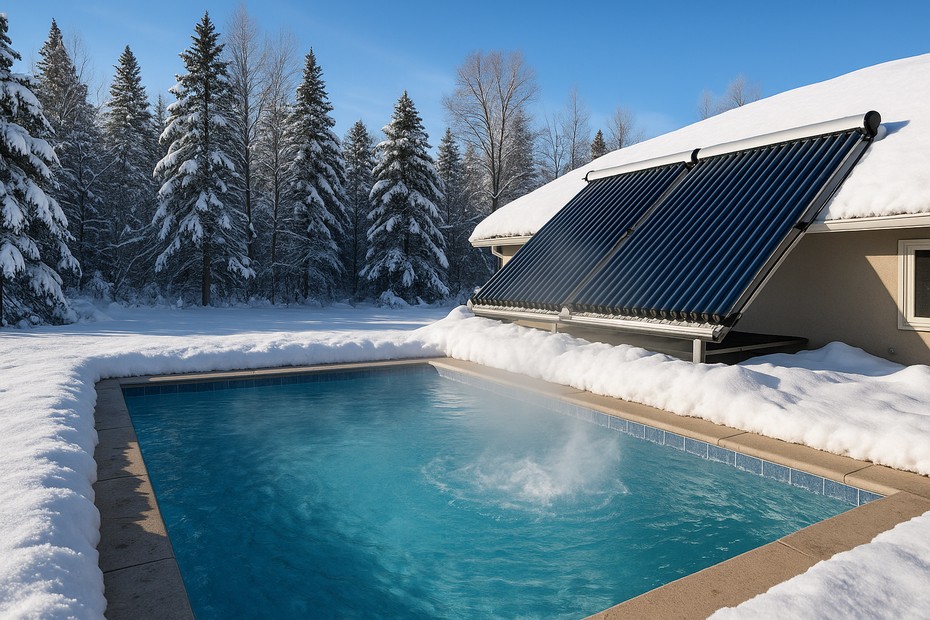
Living in Canada or the northern United States doesn’t mean you must accept a short pool season. Solar pool heaters designed for cold climates make it possible to enjoy warm, comfortable water when outdoor temperatures drop. Unlike electric or gas heaters, solar systems harness free energy from the sun, reducing environmental impact and long‑term costs. This guide explains how you can heat a swimming pool in a chilly environment, what equipment to choose, how to extend your swim season, and how to keep maintenance simple and stress‑free. Along the way, we’ll use real‑world examples and humor to keep things light while answering questions you might not even know you had.
How Solar Pool Heaters Work
A solar pool heater uses the same pump that filters your pool water to push water through collectors where sunlight warms it. The warmed water returns to your pool, boosting the overall water temperature. Unglazed collectors are made of dark plastic or rubber tubing; they’re inexpensive and work well when air temperatures are mild. Glazed collectors are made from copper tubes bonded to an aluminum absorber plate under glass; their insulated design traps heat and minimizes nighttime heat loss. Many cold‑climate systems use evacuated tube collectors — glass tubes with a vacuum gap that dramatically reduces heat loss. These tubes can heat an indoor pool even at –40 °C, making them ideal for Canada and northern states.
Key Components
- Solar collectors – absorb sunlight and transfer heat to the pool water or a heat‑transfer fluid. Evacuated tubes or glazed flat‑plate collectors are best for cold climates because insulation reduces heat loss.
- Pool pump and filter – push the water through the collectors and remove debris to keep the system clean.
- Flow‑control valve and controller – direct water through the collectors only when there is useful solar energy available. Automatic controllers turn the system on when the collector is warmer than the pool and shut it off when the pool reaches the desired temperature.
- Heat exchanger (for closed‑loop systems) – separates the pool water from the fluid in the collector loop. Vacuum‑tube systems often use antifreeze in the collector loop to prevent freezing. The stainless‑steel or titanium heat exchanger transfers heat to the pool water while keeping chlorine out of the solar tubes.
Open vs. Closed Loops
Most unglazed systems pump chlorinated pool water directly through the collectors. This open‑loop arrangement works in warm climates but is risky in cold regions because water left in the collector can freeze and crack the pipes. Vacuum‑tube systems use a closed loop with antifreeze. A small 40 W circulation pump moves the heat‑transfer fluid through the collectors and heat exchanger, so the pool pump doesn’t have to lift water to the roof. This reduces wear on your pool pump and saves electricity. Because the solar loop is separate, corrosive pool chemicals never touch the collectors.
Why Cold Climates Require Special Equipment
Heating a pool in Calgary or Minneapolis is very different from heating one in Tampa. Solar collectors must overcome greater heat losses from the pool surface and from the collector itself. Wind strips heat from the water and the collectors, while cold air and low sun angles reduce incoming energy. Without proper design, the collectors can act as heat sinks and cool the pool. Choosing the right collector type and controlling heat loss are essential.
Flat Plate vs. Evacuated Tubes in Winter
Flat‑plate collectors have a dark absorber plate under a sheet of glass. They work well for domestic water heating but lose a lot of heat to the sky in cold or windy weather. Latitude51 Solar, a Canadian supplier, notes that flat‑plate collectors can be 12 times less productive than evacuated tubes under cold and cloudy conditions because the insulation is poor and any internal heat radiates away. Both types collect snow, so don’t be fooled by the myth that flat plates shed snow automatically; after a snowfall, neither will produce heat until the snow melts.
Evacuated‑tube collectors avoid heat loss by using a vacuum between two layers of glass. Each tube has a black metal pipe inside that carries the fluid. The vacuum acts like a Thermos® bottle, trapping heat and allowing the absorber to reach high temperatures even when the air is cold. Latitude51 Solar’s pool heaters use evacuated tubes with a heat exchanger. They highlight that these systems capture solar energy even on cloudy days and are not affected by outside temperature or wind. That’s why a vacuum‑tube heater can warm an indoor pool at –40 °C.
Glazed Collectors for Variable Weather
If you prefer flat plates over evacuated tubes, choose glazed collectors instead of unglazed mats. Unprotected rubber panels work only when the air is warmer than the pool; otherwise the cold wind pulls heat out of the pool water and the collectors act as radiators. Glazed collectors enclose copper pipes and an aluminum absorber under glass, which helps retain heat at night and on cool days. A Dallas‑based pool contractor explains that glazed systems cost more than unglazed panels but deliver reliable heating when ambient temperatures drop, making them a year‑round option for cold climates. The same guide emphasises that unglazed panels are better suited to warm climates because they’re cheaper and adequate where temperatures rarely approach freezing.
Evaporative and Radiative Heat Losses
Research from Latitude51 Solar shows that 80 %–90 % of heat loss from an uninsulated pool occurs at the water surface. Wind and shade accelerate cooling. Because ground temperature is relatively stable, in‑ground pools lose less heat through their sides than above‑ground pools. The most cost‑effective first step is buying a solar pool cover, which acts like a blanket to trap heat and reduce evaporation. A cover can extend the season by several weeks, even before you install a solar heater.
Sizing a Solar Pool Heater for Cold Regions
Pool Surface Area and Solar Insolation
Collector size is usually specified as a fraction of the pool’s surface area. In Florida, unglazed collectors typically equal 50–80 % of pool area; in Minnesota or Ontario you may need 80–120 %. A rule of thumb from Latitude51 Solar suggests that in Minnesota, a solar heater may allow swimming comfortably from May through September. In southern states the same system can provide year‑round heating. Use a solar insolation map to estimate how much sunlight your location receives annually. Collectors should face south (in the northern hemisphere) at an angle close to your latitude for maximum year‑round output.
Vacuum Tube Sizing Chart
Latitude51 Solar sells pool heaters in packages from SPH‑1 to SPH‑5. Their sizing table links each package to a range of pool surface areas (e.g., SPH‑3 for 200–300 ft²). Pools larger than 500 ft² should use multiple systems in parallel. While specific packages vary by supplier, a typical cold‑climate pool may need one square foot of collector area for every square foot of pool surface plus extra capacity to overcome lower winter sun angles. Add 10–20 % to your collector area if the pool is frequently shaded or exposed to strong winds.
Considering Backup Heating
In northern locations, a solar pool heater may not raise the water to your desired temperature early in the spring. Latitude51 Solar suggests pairing solar with a gas or propane heater to quickly bring the pool up to temperature and then letting the solar collectors maintain it. A gas heater can also serve as a backup during cloudy weeks. Another option is a heat pump, which extracts heat from the air and uses electricity; heat pumps work efficiently in mild weather but less so at near‑freezing temperatures.
Installation and Components for Cold‑Climate Systems
Choosing the Right Collectors
When shopping for a cold‑climate solar pool heater, prioritize insulated, high‑temperature collectors:
- Evacuated‑tube collectors have double walls with a vacuum gap. They capture both direct sunlight and diffuse radiation, which means they produce heat on cloudy days. Because the tubes are glass, they don’t degrade in sunlight, and they’re unaffected by wind.
- Glazed flat‑plate collectors use copper pipes and an aluminum absorber plate under tempered glass. They’re less efficient than vacuum tubes in freezing weather but still suitable for moderate cold and shoulder seasons. Avoid unglazed mats unless you live in a region where winter daytime temperatures stay above ~10 °C and the collectors can drain automatically when not in use.
- Heat exchangers should be stainless steel for chlorinated pools or titanium for saltwater and highly chlorinated public pools. Titanium resists corrosion and has a longer life.
- Piping and insulation – closed‑loop systems require high‑temperature, insulated piping. Latitude51 Solar uses flexible stainless‑steel piping with EPDM insulation, which simplifies installation and eliminates soldering.
- Controllers and sensors – most systems include a controller that monitors collector and pool temperatures. When the collector is at least 4 °C warmer than the pool, the controller turns the pump on. This automatic control prevents the system from cooling the pool during cold or cloudy periods. Digital displays and Wi‑Fi connectivity allow you to monitor performance from your smartphone.
Roof Mounting
In cold climates, snow load and high winds are considerations. Vacuum‑tube collectors are heavy, and roofs must be structurally sound to carry the weight. Separated‑tube flat‑plate panels (e.g., Heliocol) require fewer roof penetrations and can handle high winds. Ensure your mounting hardware attaches securely to rafters or trusses, and always follow local building codes. If your roof lacks adequate solar exposure, ground mounts or angled frames can position the collectors for optimal sunlight.
Plumbing and Antifreeze
Closed‑loop systems use propylene glycol or an ethanol/water mixture as the heat‑transfer fluid. This fluid has a lower freezing point and circulates through the collectors and heat exchanger. A pressure relief valve and expansion tank allow for thermal expansion. When the system is off, the controller prevents stagnation and may activate a freeze‑protection cycle, briefly circulating the fluid to prevent freezing.
Open‑loop unglazed systems must be drained and isolated before freezing weather arrives. If water remains in the panels during freezing temperatures, the tubes can crack. Some controllers have freeze‑protection sensors that circulate water when the air temperature falls near freezing; however, this may not suffice in extreme cold. In climates with harsh winters, it’s safest to drain and store unglazed panels during the off season.
Operation and Maintenance
Solar Pool Covers
A solar cover or bubble blanket floats on the water surface, trapping heat and reducing evaporation. Without a cover, wind and dry air evaporate water and carry away warmth. Latitude51 Solar warns that investing in a solar heater without also using a cover is like heating a house with the windows open. A cover can reduce overnight heat loss and cut heating costs by up to 50 %. In winter, covers prevent surface ice from forming on above‑ground pools.
Monitoring and Cleaning
Solar pool heaters are largely maintenance free. However, regular inspections ensure long‑term reliability:
- Inspect collectors for debris or snow. Leaves, pine needles, and bird droppings reduce efficiency. Snow must melt naturally; never scrape or apply hot water to glass tubes. Lightly shake unglazed mats to remove snow when safe to do so.
- Rinse panels periodically to remove dust and pollen, especially during pollen season or after wildfires. Use a hose with soft spray. Avoid walking on the roof for safety.
- Check plumbing connections for leaks and ensure the pump and filter remain unobstructed. Leaks reduce system pressure and can allow air into the loop.
- Monitor controller settings. Many controllers display current pool and collector temperatures. In winter, verify that antifreeze levels are adequate and that freeze‑protection cycles activate when necessary.
Winterization
Cold‑climate solar pool systems require specific off‑season procedures:
- Drain the collectors – Use shutoff valves and drain taps to empty the fluid from unglazed panels before the first hard freeze. For vacuum‑tube systems, ensure the antifreeze mixture is at the proper concentration.
- Blow out the lines – Use a compressor or shop‑vac to blow remaining water out of pipes and collectors to prevent ice expansion damage.
- Disconnect or bypass – For open systems, set the diverter valve to bypass the solar panels during winter. Closed systems may continue operating year‑round if the pool stays open, such as for indoor pools.
- Cover the pool – Use a winter safety cover or tarp to protect the water from debris, evaporation and freezing. Pool supply shops can help you choose a cover suited to your climate.
Costs and Payback
System Cost
Solar pool heaters vary widely in price. HomeGuide estimates that a typical system costs $2,500–$6,500, including installation, with pump operating costs of $10–$25 per month and a lifespan of 10–12 years. The Gomez Roofing guide cites a range of $3,000–$6,000 for residential systems depending on pool size, collector type, and roof complexity. Vacuum‑tube systems and glazed collectors occupy the higher end of this range because of their materials and complexity. Many provinces and states offer renewable energy tax credits or rebates that can reduce upfront cost. Check your local incentives to see if solar pool heaters qualify.
Savings
Solar pool heaters tap free solar energy; the only ongoing cost is running the pump. The Gomez article notes that solar pool heaters can reduce pool heating costs by 70–90 % compared with gas or electric heaters. Over 20 years, homeowners can save thousands in utility bills while reducing carbon emissions. A similar payback appears in the Palmetto article for warm climates, which suggests a payback period of 2–3 years and a lifespan of 10–20 years. While cold climates may require larger collector areas and therefore a longer payback, the long‑term savings are still compelling, particularly for year‑round indoor pools.
Return on Investment
Return on investment (ROI) depends on local energy rates and how often you heat your pool. In provinces where natural gas is expensive or unavailable, solar becomes even more attractive. If you currently use a propane or electric heater, switching to solar can pay for itself within a few seasons. Keep in mind that a pool cover is critical for maximizing ROI because it reduces heat loss and improves system efficiency.
Benefits of Solar Pool Heating in Cold Climates
- Extended swim season – With the right collector area and a pool cover, a pool in Minnesota can be comfortable from May through September, while an indoor pool can run year‑round.
- Reduced energy costs – Solar pool heaters cut heating bills by up to 90 %. After the system pays for itself, you essentially enjoy free heat.
- Environmental advantages – Solar systems reduce carbon dioxide emissions and dependence on fossil fuels. Over twenty years, a solar heater prevents thousands of kilograms of CO₂ from entering the atmosphere.
- Low maintenance – Vacuum‑tube collectors and glazed flat‑plate collectors require minimal upkeep. Glass does not degrade in sunlight, and closed‑loop systems protect the collectors from chlorine and salt.
- Quiet and reliable – Solar heaters operate silently; the only moving part is the pump. There’s no combustion, so there’s no exhaust or risk of gas leaks.
- Versatility – Solar systems can work with indoor or outdoor pools, spas, and even koi ponds. In warm climates, the same collectors can be used to cool a pool by running them at night when the air is cooler.
Limitations and Considerations
Initial Cost and Roof Space
The upfront investment can be significant, especially for high‑performance collectors. The roof must provide enough area for the collectors, and structural reinforcement may be required. If your roof faces east or west, collectors can still work but may need to be larger to compensate for reduced sun exposure.
Variable Weather
Cold‑climate solar heaters rely on the sun. Consecutive cloudy days will reduce heat output. In shoulder seasons, you may need to supplement solar heat with a gas or electric heater to maintain pool comfort. However, the solar system will still provide some heat on bright cloudy days because evacuated tubes capture diffuse radiation.
Maintenance of Antifreeze and Mechanical Parts
Closed‑loop systems require periodic replacement of antifreeze every 3–5 years to maintain freeze protection. Pumps, valves and controllers may eventually need service. Hiring a qualified installer to set up the system ensures that components are accessible for maintenance.
Winterization
Unglazed panels must be drained and stored before freezing temperatures arrive. Failing to do so will likely destroy the panels. Plan time each fall to shut down the system properly. Vacuum‑tube collectors with antifreeze can remain in place year‑round for indoor pools, but you should still inspect them and check the fluid concentration before winter.
FAQ
Can solar pool heaters work in Canadian winters?
- Yes. Evacuated‑tube collectors and glazed flat‑plate collectors can heat indoor pools year‑round and extend the outdoor swimming season into spring and fall. Unglazed panels alone won’t perform well below about 10 °C.
Which collector type is best for cold climates?
- Vacuum‑tube collectors are ideal because the vacuum insulates the absorber, allowing it to heat water even at –40 °C. Glazed flat‑plate collectors are the next best choice, while unglazed mats are suited to warm regions.
Do I need a pool cover with solar heating?
- Absolutely. Up to 90 % of heat loss occurs at the water surface. A cover traps heat, reduces evaporation, and ensures your solar heater is effective.
How much does a solar pool heater cost?
- A typical cold‑climate system ranges from $3,000–$6,000 depending on pool size and collector type. Larger or higher‑performance systems may cost more.
What is the payback period?
- Solar pool heaters can reduce heating costs by 70–90 %. Many homeowners recover their investment in 2–7 years, depending on local fuel costs and how often they heat their pools.
How do I protect my system from freezing?
- Closed‑loop systems use antifreeze, and controllers circulate fluid during cold snaps. Unglazed systems should be drained and bypassed before winter.
Conclusion
Solar pool heating in cold climates is not a fantasy. By selecting the right type of collector, sizing the system correctly, and using a pool cover, you can enjoy comfortable swimming water even in regions known for their harsh winters. Vacuum‑tube collectors and glazed flat‑plate panels excel at capturing sun during cold and cloudy days. When paired with a properly insulated pool and perhaps a backup heater, these systems can extend your swim season from May through September or even provide year‑round heat for indoor pools. The initial investment may seem steep, but over time you’ll save money and reduce your carbon footprint. Treat your pool to the warmth of sunlight — your body (and your heating bill) will thank you.

Lee Fondiller is a seasoned operations executive with over 20 years of experience in technology and sustainability. As COO of Solar4Pools, he leads innovation in the renewable energy industry with a focus on solar-powered solutions.