
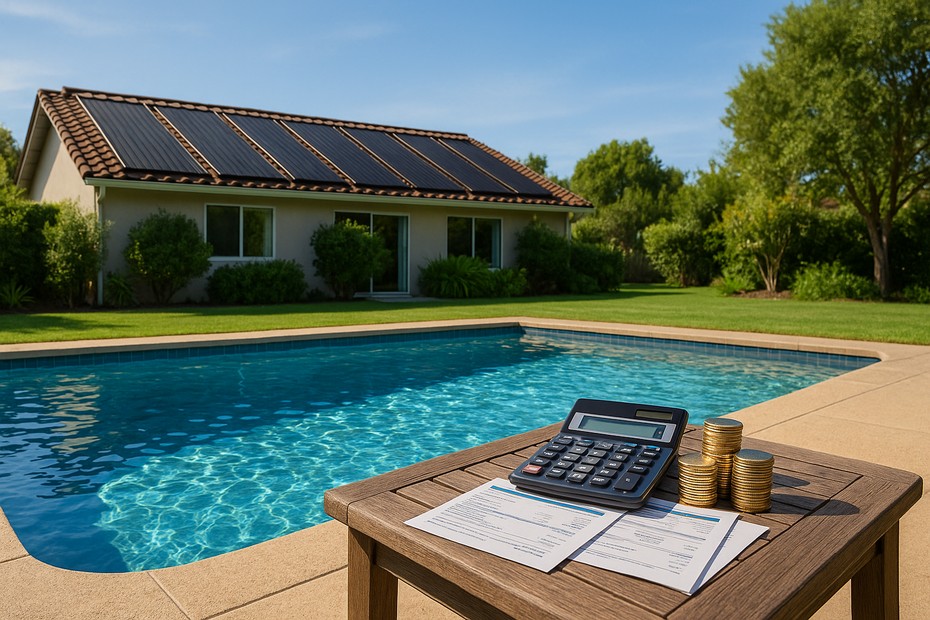
Heating a swimming pool can feel like pouring money into water. When your backyard pool stays at a comfortable temperature all season, the joy of swimming often comes at the price of high energy bills. You might have wondered whether solar pool heating is a gimmick or a real way to stop burning cash. In this article you’ll get a clear, numbers‑driven look at the return on investment (ROI) of solar pool heaters over a five‑year period. You’ll compare real costs for gas heaters, heat pumps and solar systems, learn about typical savings and see how quickly a solar pool heater can pay for itself. By the end, you’ll have enough information to decide if solar heating is worth it for your pool and climate.
Why a Five‑Year Cost Analysis Matters
Many pool owners look only at the upfront price when comparing heating options. That sticker shock may push you toward the cheapest heater, but a low initial cost often hides years of expensive fuel bills. The real ROI of a pool heater comes from comparing the total costs over time: installation plus ongoing operating expenses. A five‑year horizon captures both because most homeowners don’t replace a heater every year, yet it’s short enough to visualize clearly. This timeframe also lets you factor in improvements like variable‑speed pumps and pool covers that reduce heat loss. The numbers in this analysis use actual bills and published cost figures from manufacturers and energy experts, so the savings aren’t just theoretical.
How We Calculated Costs
For this comparison, assume you own a 500‑square‑foot in‑ground pool in a temperate climate, similar to Santa Clara, California. According to a utility company study cited by Bob’s Pool & Spa, heating a 500 sq ft pool from May through September at 80°F uses about 1,200 therms of natural gas, which translates to about $1,200 per season at residential tiered gas rates. A solar system capable of heating the same pool for the same season typically requires about 400 sq ft of collector area and costs around $6,500 installed. This solar setup uses the pool’s existing pump to circulate water and requires little extra electricity. These numbers will form the basis for comparing costs.
Costs are broken down into:
- Initial cost – equipment plus installation. Solar systems usually cost more upfront than gas or heat pumps.
- Operating cost – fuel or electricity used each year. Gas and electric heat pumps have significant recurring costs, while solar systems use only a small amount of pump power.
- Maintenance and repairs – regular cleaning and occasional part replacement. For simplicity, maintenance is assumed to be similar across systems over five years.
All prices are in U.S. dollars. Fuel prices vary by region; adjust these numbers if your local rates differ. The analysis also highlights how tax incentives and utility rebates can shorten payback time for solar systems.
Understanding Pool Heater Types
Before diving into the ROI math, it helps to understand how each type of pool heater works and what drives its costs.
Gas Pool Heaters
Gas heaters burn natural gas or propane to heat water quickly. They’re popular because they can raise pool temperature in any weather and work well for short, intense heating periods. However, gas heaters are the most expensive to operate. The Bob’s Pool case study shows that a gas heater for a 500 sq ft pool has an initial cost of about $3,600. Over five years the fuel cost can reach $15,000, bringing the total expenditure to $18,600. That’s because heating a pool requires tens of millions of BTUs each season, and burning fossil fuel generates those BTUs quickly – at a price.
Natural gas is usually measured in therms (100,000 BTUs). At roughly $1 per therm, a 400,000 BTU gas heater burns about four therms per hour. To heat a 20,000‑gallon pool by 1°F requires about 167,000 BTUs. In practice, many pool owners run gas heaters for several hours per day to maintain an 80–82°F swim temperature. At 4 therms per hour, that’s $4 per hour – $20 to $40 daily if running for five to ten hours. In cooler months or windy conditions, heat loss increases, and the heater runs even longer. Gas prices can fluctuate, so these operating costs may rise over time.
Gas heaters have moderate lifespans, often five to seven years before major repairs are needed. With proper maintenance, they can last longer, but the heat exchanger and burner assemblies corrode and eventually require replacement. When evaluating the five‑year ROI, you can expect to keep the same heater but may face rising fuel costs and occasional service calls.
Electric Heat Pumps
Heat pumps don’t burn fuel; they extract heat from the air and transfer it to the pool. They work like an air conditioner in reverse, compressing refrigerant to move heat from ambient air to water. Heat pumps use electricity, and their efficiency is measured by the coefficient of performance (COP). A COP of 5 means the unit outputs five times as much heat energy as it consumes in electricity. Manufacturers claim COPs between 3 and 7 in warm climates, but performance drops as air temperature falls below about 58°F.
Heat pumps have similar purchase prices to gas heaters—often around $5,500 for the equipment, according to the Northern Lights Solar Solutions payback table. Installation can add another $2,000–$3,000, depending on electrical work. Operating costs are lower than gas heaters because electricity is generally cheaper than gas per BTU of heat delivered. The payback table lists monthly operating costs of about $175 for a heat pump, leading to $1,050 per year and $5,250 over five years. Some owners see higher bills in colder climates or when they run the pump longer to reach desired temperatures.
Heat pumps usually last longer than gas heaters—often 8–10 years—and they require less maintenance since there’s no burner. However, they heat water more slowly and may not keep up during cold, cloudy weather. When calculating ROI, you need to consider electricity rates in your area, which can vary widely. A New York case cited by SPRSUN notes that operating a heat pump without a pool cover can cost about $975 per year, whereas using a cover lowers the cost to around $150 per year. Pool covers dramatically reduce evaporation and heat loss, so combining a heat pump with a cover improves ROI.
Solar Pool Heaters
Solar heaters capture free energy from the sun. A typical system includes dark polypropylene or glazed panels mounted on the roof or a rack, through which pool water flows. The sun warms the water as it passes through, and the water returns to the pool. Solar heaters use the existing pool pump or a small booster pump. They have higher upfront costs but near‑zero operating costs. The Northern Lights payback analysis assumes an initial cost of $6,500 and a monthly electricity cost of $10 to run the pump, leading to an annual operating cost of $60 and $300 over five years. Bob’s Pool & Spa notes that a 400 sq ft solar system for a 500 sq ft pool costs around $6,500 installed.
Solar systems last 20–30 years with minimal maintenance. Panels rarely fail; occasional leaks or loose fittings are easy to fix. Because the system uses the pool’s pump, there’s no additional fuel cost. The only recurring expense is a slight increase in pump run time or the electricity for a small booster pump. Many owners pair solar heaters with variable‑speed pumps, further reducing energy use.
Hybrid Approaches
Some pool owners combine solar heaters with gas or heat pumps. A hybrid system might use solar panels for baseline heating and a small gas or electric heater to top off the temperature during cold spells. Hybrids provide reliability in any weather but still reduce operating costs. Florida Solar Design Group calls this a Solar Hybrid Electric Pool Heating (SHEPH) system, combining photovoltaic panels with an electric heat pump. In a case study of a home in Cape Coral, a 10‑panel PV array generated enough energy during sunny days to offset the heat pump’s electricity consumption, achieving net‑zero energy cost for pool heating over time. On cloudy days energy consumption exceeded production, but sunny‑day energy credits balanced the shortfalls. Hybrid systems are more complex and expensive to install but offer resilience and the potential for very low operating costs.
Five‑Year Cost Comparison: Gas vs Heat Pump vs Solar
Now let’s compare the total cost of each system over a five‑year period using real numbers. The table below summarizes the initial cost, annual operating cost, five‑year operating cost and total cost for a typical pool. The figures for gas heaters and heat pumps come from Bob’s Pool & Spa and Northern Lights Solar Solutions; the solar figures come from the same sources and from the SPRSUN and Gomez Roofing articles.
| Heater Type | Initial Cost | Annual Operating Cost | Five‑Year Operating Cost | Total Cost Over 5 Years |
| Gas heater | ~$3,600 initial | ~$3,000 (fuel & maintenance) | ~$15,000 | $18,600 |
| Electric heat pump | ~$5,500 initial | ~$1,050 | ~$5,250 | $10,750 |
| Solar heater | ~$6,500 initial | ~$60 | ~$300 | $6,800 |
The numbers show that, even though solar heaters cost more upfront than gas heaters, their tiny operating cost makes them far cheaper over five years. Gas heaters cost almost three times as much as solar systems when you include fuel costs. Electric heat pumps fall in the middle, with a higher initial price than gas but much lower operating costs. If you’re considering a heat pump, using a pool cover can cut operating costs by more than half. But the solar heater still wins the cost competition.
Real‑World Example: Bob’s Pool Case Study
Bob’s Pool & Spa tracked heating costs for a 500 sq ft pool using gas and then solar. The gas heater burned 1,200 therms per season and cost around $1,200 per year. Over five years the fuel cost totaled $15,000, and the heater itself cost $3,600. The homeowners replaced the gas system with a 400 sq ft solar array costing $6,500 installed. Over five years they spent virtually nothing on fuel. The result: the solar system saved $11,100 compared with gas and paid for itself in less than four years. Even if gas prices drop temporarily, the savings remain huge over decades.
Real‑World Example: Northern Lights Payback Table
Northern Lights Solar Solutions provides a payback table comparing a $6,500 solar system, a $5,500 gas heater, and a $5,500 heat pump. The table assumes six months of use per year and shows annual operating costs of $60 for solar, $2,400 for gas, and $1,050 for a heat pump. Over five years, total costs are $6,800 for solar, $17,500 for gas, and $10,750 for heat pumps. The payback period for solar vs gas is calculated as the initial investment divided by the annual savings. In this example, annual savings are $2,340 ($2,400 minus $60), so the payback is $6,500 ÷ $2,340 ≈ 2.35 years. Against a heat pump, annual savings of $990 ($1,050 minus $60) yield a payback of $5,500 ÷ $990 ≈ 5.55 years. These numbers echo the Bob’s Pool case and show that solar heaters deliver an ROI similar to a high‑yield investment—around 42 % per year.
Beyond the Numbers: Hidden Benefits of Solar Heating
While the five‑year cost comparison clearly favors solar heaters, there are additional factors that improve ROI and value.
Longer Lifespan and Low Maintenance
Solar pool heaters are built to last. Plastic and polymer panels resist corrosion, saltwater and chlorine. Manufacturers often offer warranties of 10–12 years, and many systems operate 20–30 years with few repairs. Gas heaters, by contrast, have high heat flux that deteriorates the heat exchanger, especially if pool chemistry isn’t balanced. Electric heat pumps are more durable but still use compressors and refrigerant systems that require servicing. Because a solar heater lasts two or three times as long as other heaters, you may never need to buy another heater again—further improving ROI.
Free Fuel and Price Stability
Once installed, solar heaters rely on sunlight—a free and abundant resource. Gas and electricity prices fluctuate; gas prices have spiked in recent years and can vary wildly by location. Electricity rates often increase annually. With solar, your fuel cost is locked at zero (aside from pump electricity) for decades. That stability makes budgeting simple and protects you from energy‑market volatility. Some homeowners pair solar heaters with photovoltaic panels and battery storage to offset pump electricity, reducing operating costs to near zero.
Environmental Benefits
Heating pools with fossil fuels releases carbon dioxide and other pollutants. Burning natural gas to heat a pool can produce hundreds of pounds of CO₂ each year, whereas a solar heater produces none. Installing a solar pool heater can reduce your household’s carbon footprint and help mitigate climate change. Gomez Roofing notes that solar heaters can cut pool heating emissions by up to 8,000 pounds of CO₂ per year (equal to planting roughly 100 trees). For environmentally conscious homeowners, that benefit adds intangible value beyond monetary savings.
Increased Property Value
According to Gomez Roofing, adding a solar pool heater can increase your home’s resale value by 4–6 %. Buyers appreciate lower utility bills and eco‑friendly features. In regions with solar‑ready building codes or energy efficiency incentives, a solar heater may even be necessary to meet new requirements. Installing solar now can future‑proof your home and make it more attractive when you sell.
Practical Tips to Maximize Your ROI
Switching to solar pool heating is a smart financial move, but you can enhance your returns further with these practical steps.
- Use a pool cover. Pool covers reduce evaporation, which is the largest source of heat loss. SPRSUN notes that covers can cut heating costs by 50–70 %. Even with solar heating, covering the pool at night or during windy days keeps water warm and reduces pump run time.
- Install a variable‑speed pump. Modern variable‑speed pumps use less electricity than single‑speed models. Because solar heaters rely on the pool’s pump to circulate water through the panels, upgrading to an efficient pump lowers operating costs. Many utility rebates help cover the cost of variable‑speed pumps.
- Size your system correctly. Solar collectors should cover 50–100 % of the pool’s surface area, depending on the climate. Undersized systems won’t heat the pool enough; oversized systems cost more than necessary. Use sizing calculators or consult a local installer to match collector area to pool volume and desired temperature rise.
- Maintain good water chemistry. Balanced pH and sanitizer levels protect your solar system and the rest of your pool equipment. Corrosive or scale‑forming water can damage pipes, valves and the heat exchanger in hybrid systems. Check chemistry weekly and adjust as needed.
- Take advantage of incentives. Many regions offer tax credits or rebates for renewable energy installations. In the United States, the federal solar tax credit allows you to deduct 30 % of the cost of a solar heating system from your income tax, reducing your payback time. Some utilities offer additional rebates for solar pool heaters and variable‑speed pumps.
- Consider hybrid systems in marginal climates. If you live in a colder region or want year‑round swimming, combining a solar heater with a small gas or electric heater ensures the pool stays warm even during cloudy weather. The solar system will handle most heating duties, and the backup heater will run only occasionally, keeping operating costs low.
Common Questions and Quick Answers
How long does it take for a solar pool heater to pay for itself? A properly sized solar pool heater typically pays for itself in 2–4 years when compared with gas heaters, and about 5–6 years versus heat pumps. After that, your heating cost is almost zero.
What is the total cost of a solar pool heater over five years? Including installation and pump electricity, expect about $6,800. For comparison, gas heaters cost about $18,600, and heat pumps cost around $10,750 over the same period.
Do solar pool heaters work in cloudy or cold climates? Yes, but performance drops on cloudy days. In colder regions, combining solar with a backup heat pump or gas heater ensures consistent temperatures. Hybrid systems can still achieve net‑zero energy cost when sized correctly and paired with photovoltaic panels.
Will a solar pool heater increase my electric bill? Only slightly. Running the pool pump longer or adding a small booster pump adds about $10 per month, or $60 per year.
What is the lifespan of a solar pool heating system? Solar systems last 20–30 years, much longer than gas heaters (5–7 years) and heat pumps (8–10 years).
Putting It All Together: Is Solar Pool Heating Worth It?
The real ROI of solar pool heating becomes clear when you look beyond the upfront price tag. Over five years, a typical solar system costs about $6,800, while a gas heater can cost $18,600 and a heat pump about $10,750. Solar heaters pay for themselves in roughly two to four years through energy savings, and they continue delivering free heat for decades. They have the longest lifespan, lowest operating costs and minimal maintenance. When you factor in tax credits, reduced carbon emissions, increased property value and the peace of mind of stable energy costs, the return on investment becomes even more compelling.
If you’re still heating your pool with gas or electricity alone, consider running a quick calculation based on your current bills. How much are you spending each month to keep the water comfortable? Multiply that by five and compare it with the cost of a solar system. Chances are the solar option will save you thousands of dollars and give you the satisfaction of using clean, renewable energy. Remember, the sun sends billions of dollars of free energy to Earth every day—you just need to collect your share.
Final Thoughts
Making the leap to solar pool heating might seem like a big step, but the numbers speak for themselves. Over five years you’ll spend far less money, reduce your carbon footprint and worry less about fluctuating fuel prices. The initial investment pays for itself quickly, and the system keeps working for decades. Whether you’re an eco‑conscious homeowner, a thrifty investor or someone who simply loves a warm swim, solar pool heating offers a high return on investment and a clear path to long‑term savings. Dive in, take advantage of the sun’s free heat, and enjoy your pool without watching your money evaporate.

Lee Fondiller is a seasoned operations executive with over 20 years of experience in technology and sustainability. As COO of Solar4Pools, he leads innovation in the renewable energy industry with a focus on solar-powered solutions.