
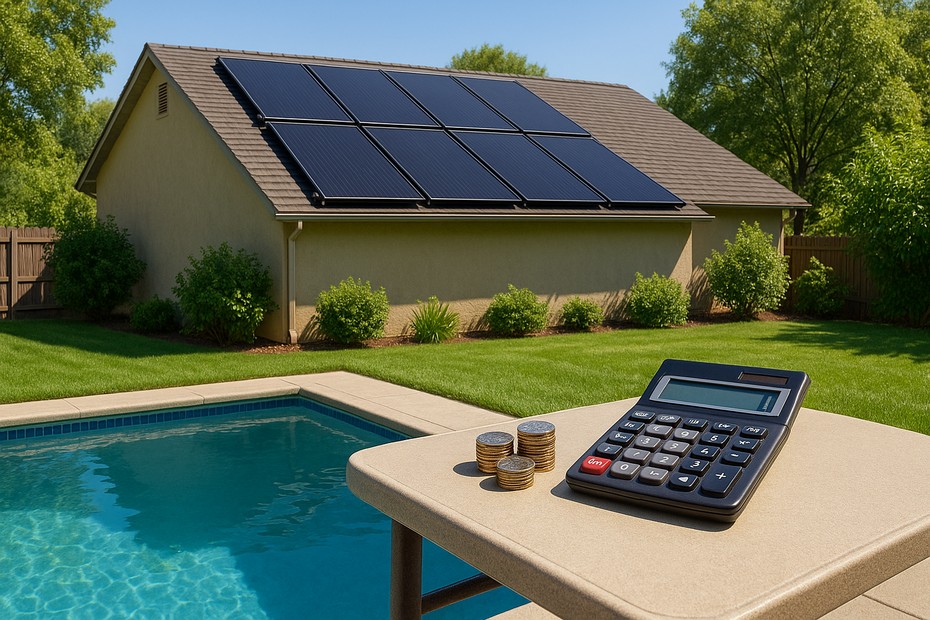
Solar pool heaters have moved from niche curiosity to mainstream upgrade. If you’re a pool owner who wants to extend the swim season without burning through natural gas or electricity, it’s natural to ask: What will a solar heater really cost and when will it pay off? This guide breaks down the dollars and cents so you can make an informed decision. Unlike marketing flyers that gloss over the details, this article pulls numbers from trusted sources and presents them in plain language. By the end, you’ll know exactly how the upfront cost, operating savings and longevity combine to create your return on investment (ROI). You’ll also see where solar pool heaters shine, where they fall short and why thousands of households have already made the switch.
Breaking Down the Initial Investment
Equipment cost
Solar pool heating systems are simple: they consist of solar collector panels, a diverter valve, fittings and sometimes a controller. The collectors themselves account for most of the equipment cost. According to HomeGuide’s 2025 cost guide, a solar pool heating system (excluding labor) typically runs $2,000–$5,000. The same guide notes that complete kits from reputable brands such as Heliocol or SwimLux range from $2,000–$7,900 depending on the brand and whether an automatic controller is included. Lower‑priced DIY kits from Fafco or SunHeater start around $800, but these are usually smaller, less durable and lack automation. Panel type also affects price: polypropylene mats and unglazed plastic panels cost $1,000–$4,500 installed, while glazed collectors with glass coverings and copper tubing run $3,000–$10,000. Glazed panels are efficient in colder or shadier climates because the glass traps more heat.
Installation and labor
Labor adds roughly $500–$1,500 to the price tag, bringing the typical installed cost for a residential system to $2,500–$6,500. Contractors need to anchor collectors securely, run plumbing lines from your pool pump to the roof or ground‑mounted rack, and install control valves. Installation costs vary with roof type, complexity of plumbing and whether a reinforced mounting rack is required. For example, Gomez Roofing, a Florida installer, reports that systems in their region cost $3,000–$7,000 installed, with unglazed panels on a sloped roof at the lower end and glazed panels requiring custom racks at the higher end. If you have an above‑ground pool, you may be able to mount collectors on the ground near the pool, reducing labor. For do‑it‑yourselfers, kit manufacturers like Enersol and SmartPool supply detailed instructions; however, professional installation is recommended to ensure correct sizing and compliance with building codes.
Additional equipment and options
Optional add‑ons can increase the initial cost but may improve performance or convenience. An automatic diverter valve with a temperature controller costs $325–$600. A solar blanket or pool cover costs $35–$400 and reduces heat loss at night, which helps the solar heater maintain warmer water. If your roof lacks the space for collectors equal to at least 50% of your pool’s surface area (the minimum recommended sizing for southern climates), you may need a ground‑mounted rack, increasing material and labor expenses. Finally, some homeowners upgrade their pool pump to a variable‑speed model to save energy when running the circulation system.
Ongoing Operating Costs and Savings
How much does it cost to run a solar pool heater?
Unlike gas or electric heaters, solar collectors require no fuel. The only operating cost is the extra electricity needed to run the pool pump longer when the system is heating. HomeGuide estimates that running a solar pool heater adds $10–$25 per month to your electricity bill. The Gomez Roofing guide expresses this as under $1.50 per day, or roughly <$550 per year. These figures assume the existing pump is used and runs only during sunny hours; variable‑speed pumps further reduce consumption.
Running costs for other heater types
For comparison, conventional pool heaters can be pricey to operate. According to the Palmetto Energy article (based on BKV Energy data), heating a pool with electricity, natural gas or propane costs $100–$450 per month. The Flamingo Blue Pools business guide breaks down costs as $200–$400 per month for gas heaters, $150–$300 per month for electric heaters and $50–$150 per month for heat pumps, while solar heating costs $0–$20 per month. HomeGuide notes that a gas pool heater costs $200–$500 per month to operate and a heat‑pump heater costs $50–$150 per month. These large differences explain why solar heaters can dramatically lower your pool‑heating bills.
Annual savings and fuel cost inflation
Because solar heating largely eliminates fossil fuel use, your annual savings equal the fuel you would otherwise buy. In California, Bob’s Pool & Spa cites a study where a 500‑square‑foot pool heated with a gas heater consumed 1,200 therms of natural gas during a single swim season—about $1,200 at typical tiered rates. A 400‑square‑foot solar system maintained the same temperature and extended the season for about $6,500 installed. Over five years, the gas system cost $18,600 (initial purchase plus fuel) while the solar system cost $7,500 (equipment only), saving $11,100. Fuel prices also tend to rise over time; by contrast, the sun is free. If gas rates increase 5% per year, annual savings grow accordingly, shortening the payback period.
Payback Period and Return on Investment
Simple payback calculation
The simplest way to estimate payback is to divide the net upfront cost by annual savings. Suppose you invest $5,000 in a solar pool heating system. Gomez Roofing’s cost table lists annual operating costs for a gas heater at $1,200–$2,500. If you previously spent $1,200 per year on gas, switching to solar reduces that fuel bill almost completely. After subtracting the extra pump electricity (≈$200), your annual savings are about $1,000. A $5,000 investment divided by $1,000 saved gives a payback of five years. Gomez also describes a scenario where a $5,000 system saves $1,200 a year, achieving payback in just over four years. HomeGuide sets a broader range of 1–7 years, depending on climate, pool size and fuel costs.
ROI over the system’s lifespan
Solar pool heaters typically last 15–20 years, sometimes longer. Once the system pays for itself, every additional year of free heat is pure profit. Gomez Roofing notes that over a 20‑year lifespan, homeowners may recoup three to four times their original investment. For example, investing $5,000 today yields roughly $1,000 in fuel savings per year for 15 additional years: a total of $15,000 in savings beyond your original cost. Even if maintenance or pump replacements cost a few hundred dollars over two decades, the net ROI remains attractive.
Comparisons with other heaters
The payback for other heating technologies is much longer. Heat pumps cost $3,500–$6,500 to install and have annual operating costs of $800–$1,500. With energy costs still high, a $5,000 heat pump might save only $400 per year relative to gas, resulting in a payback of over 12 years. Gas heaters have a low upfront cost ($2,500–$5,000) but high operating costs; you never reach a payback because you’re locked into buying fuel. That’s why solar pool heating is often described as one of the quickest‑paying energy upgrades for homeowners.
Factors That Affect Your ROI
Pool size and collector sizing
Your pool’s surface area determines how much collector area you need. HomeGuide recommends sizing collectors equal to 50–75% of the pool’s surface for a three‑ to six‑month season and 100% for year‑round heating in northern climates. A small above‑ground pool might need only four 4′ x 10′ panels (about $1,600–$4,500), while a large in‑ground pool may require eight to ten panels, pushing system cost toward the $7,000 mark. Accurate sizing ensures the heater can raise water temperature by 8°–12°F and maintain comfortable swimming conditions.
Sun exposure and climate
Solar heating yields the best ROI in sunny regions. In southern states like Florida, systems convert up to 80% of available solar radiation into usable heat and provide heat even during winter. In northern climates, you may need a larger collector area or glazed panels to achieve the same temperature rise. Overcast days reduce output to 50–70% of peak, yet a pool cover preserves heat until the sun returns. If your roof is shaded or oriented east/west instead of south, ROI declines because collectors operate fewer hours per day.
Pool usage and desired temperature
How often you swim and how warm you like the water also influence your ROI. Heating a pool to 80°F for six months will cost more with any heating method than heating to 75°F for four months. Solar systems excel at gradually raising the water temperature and maintaining it; they are not designed for rapid temperature boosts. If you require quick heating for spontaneous winter swims, a gas heater might remain as a backup.
Local utility rates and incentives
Fuel and electricity prices vary widely. In areas with expensive natural gas or electricity, solar savings are larger and payback times shrink. Conversely, if you pay only $0.06 per kWh and have mild weather, running a heat pump might be cheap enough that solar’s ROI is less compelling. When exploring incentives, remember that the federal residential solar tax credit does not apply to solar pool heaters because they heat swimming pool water rather than domestic water. Some utilities, however, offer rebates or low‑interest financing for solar thermal systems. Check with your local energy office or pool‑heating installer for region‑specific programs.
Maintenance, Longevity and Hidden Costs
Maintenance tasks
Solar pool heaters are low‑maintenance, but they’re not maintenance‑free. HomeGuide advises that systems last 15–20 years when properly installed and maintained. Routine upkeep includes checking collectors for debris and damage, flushing lines and cleaning filters, and verifying diverter valve operation. Gomez Roofing recommends quarterly inspections for debris or algae, biannual flushing and valve checks, and annual calibration of sensors. Properly balanced pool chemistry prevents scale buildup in the collectors. In dry climates, glazed collectors may need occasional cleaning because rain does not wash away dust.
Repair and replacement costs
Over two decades, minor repairs may be needed. Replacing an automatic valve or controller typically costs $300–$600. If a panel develops a leak, individual tubes can often be patched or replaced for under $100. Whole‑panel replacement may cost $400–$800. These costs pale compared with ongoing fuel bills for gas or electric heaters. Also budget for a new pool pump every 7–10 years if your current pump is near the end of its life; energy‑efficient models cost $700–$1,500 but save electricity.
Longevity and resale value
Most solar pool heaters are backed by 10–12‑year manufacturer warranties. In practice, collectors often last 20+ years. Because they have no moving parts, wear and tear is minimal. If you maintain your pump and plumbing and protect the panels from freeze damage (by draining them during winter in cold climates), the system should outlast gas and heat‑pump heaters. Another hidden benefit is improved property value: solar‑equipped homes often command a 4–6% premium according to Gomez Roofing, as buyers appreciate lower energy bills and eco‑friendly features.
Environmental and Lifestyle Benefits
Beyond dollars and cents, solar pool heaters offer meaningful environmental and lifestyle advantages. By replacing fossil‑fuel heating with renewable energy, you cut your home’s carbon footprint. Gomez Roofing estimates that a solar pool heater can reduce emissions by up to 8,000 pounds of CO₂ annually compared with gas heating. Palmetto notes that using clean power to heat a pool reduces the home’s overall carbon footprint and supports a sustainable lifestyle. Solar systems also extend the swim season by 2–4 months, giving you more time to enjoy your pool without guilt about fuel use. And because the system uses the existing pump, maintenance is easier and quieter than with gas burners or compressors.
Key numbers to remember
- Cost: Solar pool heaters cost $2,500–$6,500 installed.
- Monthly cost: Solar adds $10–$25/month to pump electricity.
- Savings: They cut heating bills up to 70%.
- Payback: Typical payback is 4–7 years; as low as 1–2 years in sunny regions.
- Lifespan: Systems last 15–20 years.
These concise bullet points answer the most common questions about cost, savings and ROI.
Conclusion
Solar pool heating isn’t just a feel‑good upgrade; it’s a financial decision with clear numbers behind it. Upfront costs of $2,500–$7,000 may sound steep, but when you compare them to gas or electric heating bills of $1,000–$2,500 per year, the math quickly tilts in solar’s favor. Operating costs are minimal—often $10–$25 per month—and payback periods commonly range from four to seven years. Over a 20‑year lifespan, you can triple or quadruple your initial investment in saved fuel costs and enjoy warmer water for more months of the year. While federal tax credits do not apply to solar pool heaters, the environmental benefits, extended swim season and potential property value boost make the investment even more appealing. If you’re ready to stop feeding money into a gas burner or electric element and start harnessing free sunshine, a solar pool heater offers one of the best returns in home energy upgrades.

Lee Fondiller is a seasoned operations executive with over 20 years of experience in technology and sustainability. As COO of Solar4Pools, he leads innovation in the renewable energy industry with a focus on solar-powered solutions.