
While the upfront cost of solar panels and wind turbines is often the focus of public discussion, the true financial picture of renewable energy economics is far more complex, encompassing a web of hidden costs, overlooked benefits, and powerful economic incentives that most consumers never see.
Understanding these underlying economic forces is the key to making informed decisions about your energy future. This article will unpack the intricate financial realities of renewable energy, moving beyond the sticker price to reveal the data-driven factors that determine its real-world cost and long-term value for you as a consumer.
Beyond the Sticker Price: What is the True Cost of Renewable Energy?
When you hear that solar and wind are now the cheapest forms of new electricity generation, you might wonder why your utility bill hasn’t dropped to near zero. The answer lies in a metric called the Levelized Cost of Energy (LCOE), which represents the average revenue per unit of electricity generated that would be required to recover the costs of building and operating a generating plant over an assumed financial life and duty cycle. It’s the most effective way to compare the true, lifetime costs of different power sources.
According to the latest 2025 analyses from leading energy research firms, the LCOE for utility-scale solar and onshore wind is now consistently lower than that of new natural gas, coal, and nuclear power plants [1] [2]. This marks a monumental shift in the global energy landscape. For decades, fossil fuels were the undisputed kings of low-cost power, but relentless innovation and massive economies of scale have driven down the cost of renewable technologies at an unprecedented rate.
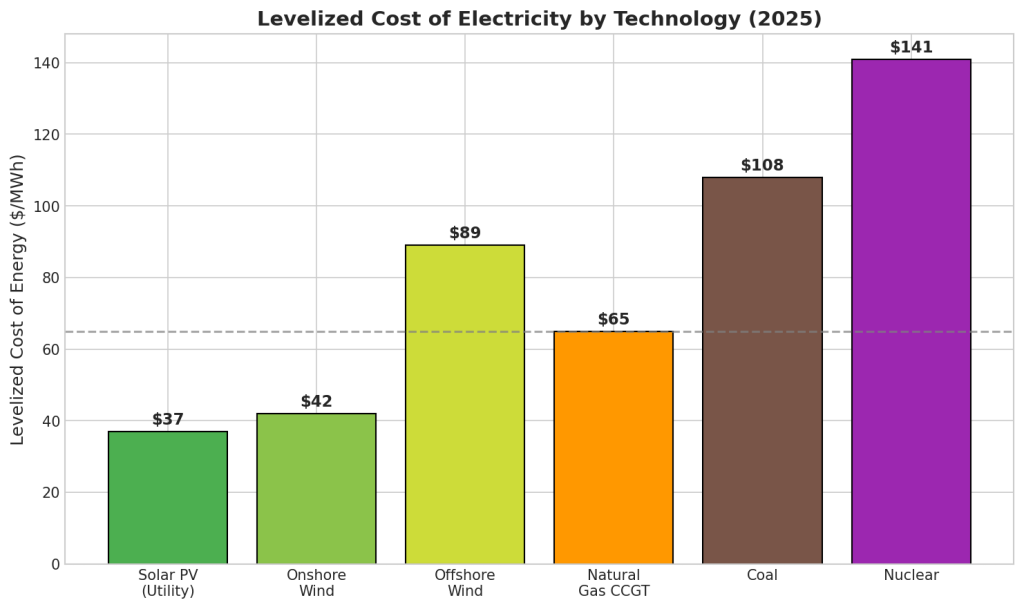
Data Sources: Wood Mackenzie, BloombergNEF, Lazard [1] [2] [3]
As the chart above illustrates, the LCOE for utility-scale solar PV can be as low as $37 per megawatt-hour (MWh), with onshore wind close behind at $42/MWh. In contrast, a new, highly efficient natural gas combined-cycle (CCGT) plant has an LCOE of around $65/MWh, while coal and nuclear are significantly more expensive at $108/MWh and $141/MWh, respectively. This data confirms a powerful truth: on a pure, unsubsidized, new-build basis, renewables are the most cost-effective option for generating electricity today.
The International Renewable Energy Agency (IRENA) reinforces this point in its 2024 cost report, noting that 91% of all newly commissioned utility-scale renewable power capacity in 2024 had a lower cost than the cheapest new fossil fuel-fired option [4]. The global weighted-average LCOE of new utility-scale solar PV projects added in 2024 fell by 82% between 2010 and 2024, while that of onshore wind fell by 39% [4]. This isn’t a fleeting trend; it’s a fundamental, long-term restructuring of energy economics.
However, LCOE only tells part of the story. It measures the cost of generating a kilowatt-hour of electricity at the plant gate. It does not account for the costs required to deliver that electricity to your home reliably, 24/7. This is where the ‘hidden costs’ of renewables come into play, and it’s a crucial piece of the puzzle that most consumers miss.
The Challenge of Intermittency and Grid Integration
The sun doesn’t always shine, and the wind doesn’t always blow. This variability, known as intermittency, is the primary technical challenge for renewable energy. Unlike conventional power plants that can be dispatched on demand, solar and wind generation fluctuates with weather and time of day. Integrating these variable resources into the grid requires a host of ancillary services to ensure that supply always meets demand, maintaining the grid’s stability and reliability.
These services are not free, and their costs are a significant factor in the total price you pay for electricity. A 2023 report from the Texas Public Policy Foundation provides a stark example. In 2023, Texas, which leads the U.S. in renewable energy production, spent an estimated $2.3 billion on ancillary services to manage the variability of its wind and solar fleet [5]. These costs, ultimately passed on to consumers, contributed to a nearly 20% increase in Texas electricity bills over the preceding three years, even as natural gas prices hit historic lows [5].
Table 1: Ancillary Services Required for Renewable Integration
| Service | Description | Purpose |
| Frequency Regulation | Real-time balancing of generation and load | Maintains grid frequency at a stable 60 Hz to prevent equipment damage and blackouts. |
| Voltage Support | Managing reactive power to maintain stable voltage levels | Prevents voltage collapse and ensures power quality for sensitive electronics. |
| Spinning Reserves | Online generation capacity ready to ramp up instantly | Provides immediate backup power in case of a sudden drop in renewable generation. |
| Non-spinning Reserves | Offline capacity that can be brought online quickly (10-30 mins) | Offers a secondary layer of backup for more prolonged generation shortfalls. |
| Load Following | Ramping generation up and down to match demand changes | Accommodates the natural, slower fluctuations in electricity demand throughout the day. |
Source: Adapted from North American Electric Reliability Corporation (NERC) [6]
These ancillary services add a premium to the cost of renewable electricity that isn’t captured in the LCOE. This is a critical point: while the generation of a solar or wind kilowatt-hour is cheap, the delivery of a reliable, on-demand kilowatt-hour from a grid with high renewable penetration is more complex and costly. This is the economic reality that utility companies and grid operators grapple with daily.
The Hidden Windfalls: Overlooked Financial Benefits for Consumers
While the costs of grid integration are real, they are often overshadowed by a powerful set of financial benefits and incentives that directly reward consumers for adopting renewable energy. These ‘hidden windfalls’ can dramatically alter the economic equation of going solar, turning it from a simple purchase into a high-return investment.
Federal, State, and Local Incentives
The most significant of these benefits has been the federal Solar Investment Tax Credit (ITC). This incentive has been a cornerstone of U.S. solar policy, allowing homeowners to claim a significant portion of their solar installation costs as a direct, dollar-for-dollar credit against their federal tax liability. For years, this credit stood at 30%, effectively giving homeowners a 30% discount on the total cost of their system.
However, the policy landscape is shifting. Congressional action in July 2025, under the One Big Beautiful Bill Act (OBBBA), dramatically accelerated the phase-out of the residential ITC. For customer-owned systems, the credit is set to expire completely on December 31, 2025, nearly a decade ahead of its previous schedule [7]. This creates a powerful, time-sensitive incentive for homeowners to act quickly.
Table 2: Federal Solar Tax Credit (ITC) Step-Down Schedule
| Year of Installation | Residential Credit | Commercial Credit |
| 2022-2025 | 30% | 30% |
| 2026+ | 0% (customer-owned) | 30% (via Section 48E) |
Source: Internal Revenue Service, EnergySage [7] [8]
Beyond the federal ITC, a rich tapestry of state and local incentives can further reduce the cost of going solar. These can include state tax credits, cash rebates, performance-based incentives like Solar Renewable Energy Certificates (SRECs), and property tax exemptions. The availability and value of these programs vary significantly by location, making it essential to research the specific incentives available in your area. The DSIRE database, funded by the U.S. Department of Energy, is the most comprehensive resource for this information [9].
The Soaring Value of Your Home
One of the most compelling, yet often overlooked, economic benefits of a solar installation is the significant value it can add to your home. Multiple studies have confirmed that homes with solar panels sell for a premium compared to similar homes without them. A 2025 analysis by SolarReviews, leveraging data from Zillow, found that homes with solar panels sold for an average of 6.9% more than homes without [10].
Research from the U.S. Department of Energy’s Lawrence Berkeley National Laboratory has found that for every dollar saved on your annual energy bill, your home’s value increases by approximately $20 [11]. This means a solar system that saves you $1,000 per year could add $20,000 to the resale value of your home. In markets with high electricity rates and strong solar incentives, the increase in home value can often exceed the net cost of the solar installation itself, providing an immediate return on investment.
This value proposition is not lost on homebuyers. As more consumers become aware of the long-term savings and energy independence that solar provides, a solar-equipped home becomes a highly attractive asset in the real estate market.
The Power of the Payback Period: A Consumer’s Guide to Solar ROI
For most consumers, the ultimate measure of a solar investment’s success is its payback period: the length of time it takes for the accumulated savings on your electric bill to equal the total cost of the system. After this break-even point, every kilowatt-hour of electricity your system produces is essentially free.
The average solar payback period in the U.S. is currently around 10.5 years, but this figure varies dramatically by state, driven by local electricity rates, the strength of solar incentives, and installation costs [12].
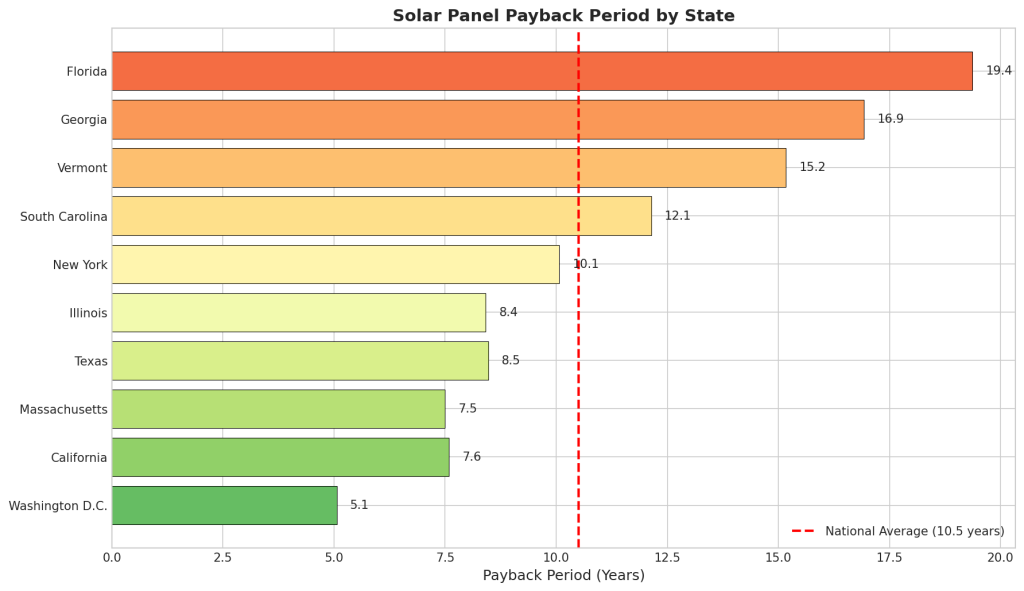
Data Source: EnergySage [12]
As the chart demonstrates, in states with high electricity costs and strong incentives like Massachusetts and California, the payback period can be as short as 7.5 years. In contrast, states with lower electricity rates, like Florida, can see payback periods approaching 20 years. This highlights the critical importance of understanding your local energy market when evaluating a solar investment.
However, the payback period is just the beginning of the story. The real financial power of solar is realized in the years after the system has paid for itself. With a typical solar panel warranty of 25-30 years, homeowners can look forward to 15-20 years of free electricity, generating tens of thousands of dollars in savings over the life of the system.
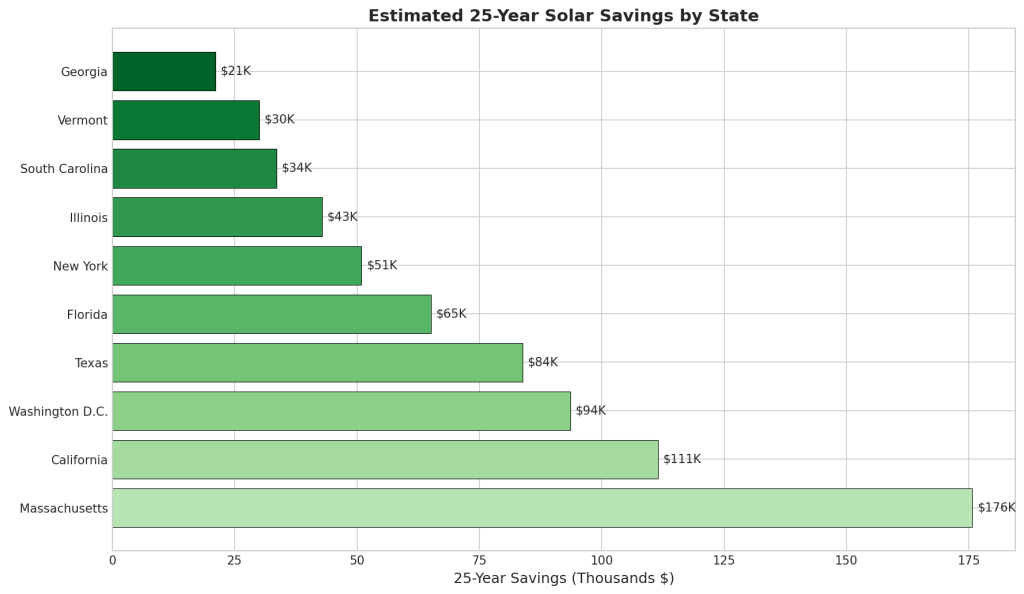
Data Source: EnergySage [12]
These long-term savings are amplified by the relentless rise in utility electricity prices. Over the past decade, average residential electricity rates in the U.S. have increased by over 36% [13]. By generating your own power, you are effectively locking in your electricity costs for the next 25-30 years, protecting yourself from this volatile and unpredictable market.
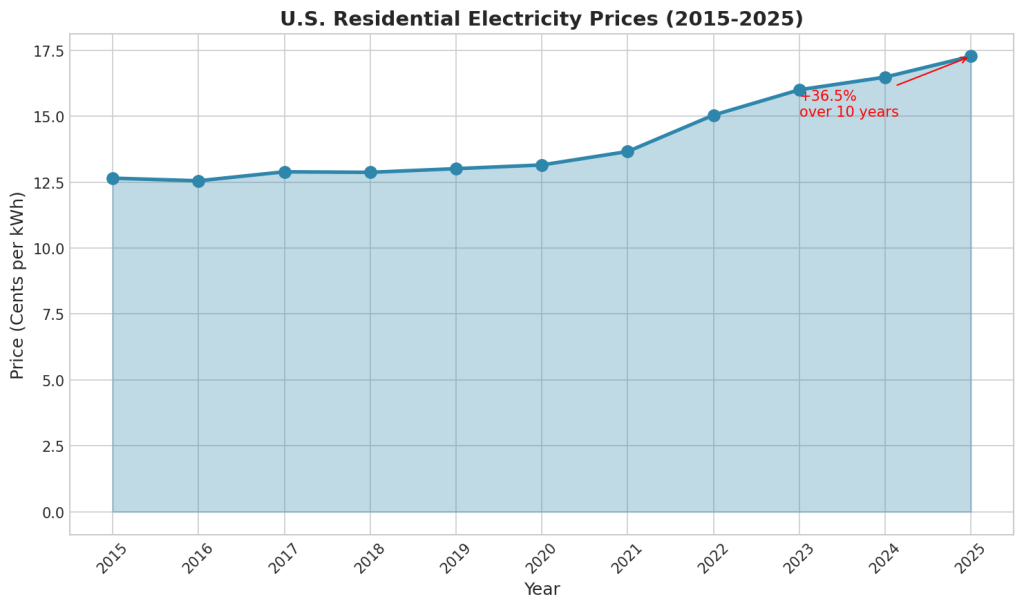
Data Source: U.S. Energy Information Administration (EIA) [13]
The Hidden Costs You Can’t Ignore: Soft Costs and Maintenance
While the financial benefits of solar are compelling, it’s crucial to have a clear-eyed view of all the costs involved. Beyond the hardware, a significant portion of a solar system’s price tag is made up of “soft costs.” These are the non-hardware expenses that can collectively account for over half of the total cost of a residential solar installation.
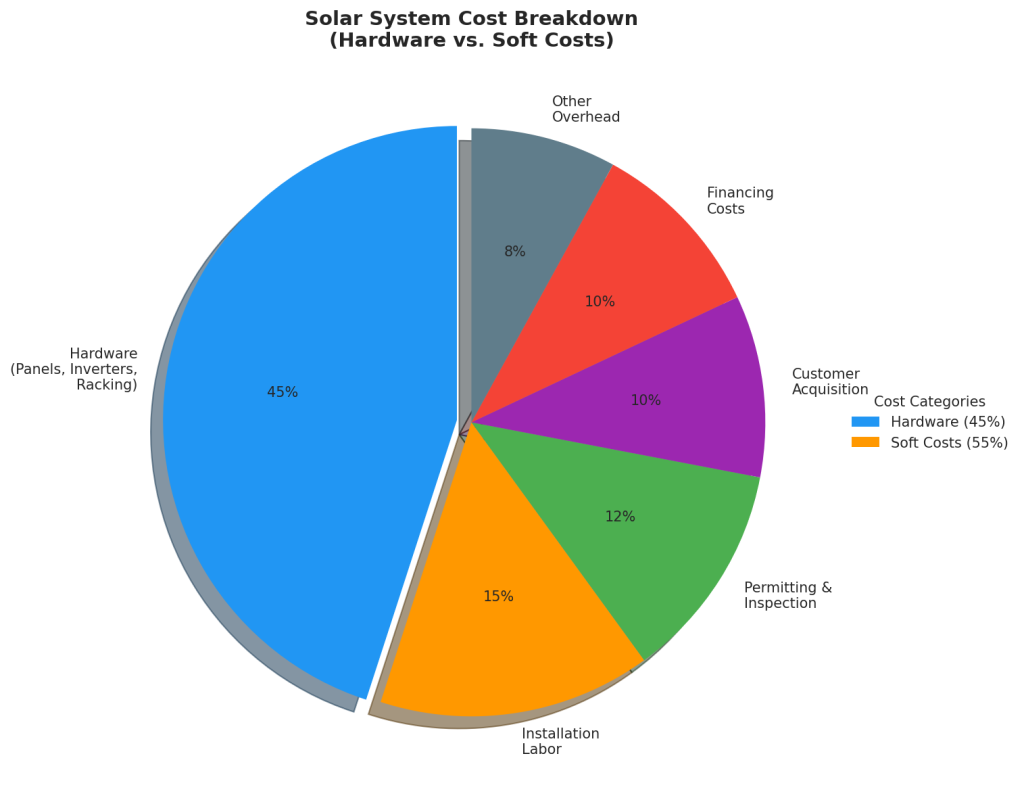
Data Source: U.S. Department of Energy [16]
These soft costs include installation labor, permitting and inspection fees, customer acquisition (sales and marketing), and overhead for the solar company. The complexity and variability of local permitting processes are a major driver of these costs. A lack of standardized procedures across different municipalities can lead to delays and increased administrative burdens for installers, costs that are ultimately passed on to you, the consumer.
Maintenance is another cost factor to consider. While solar panels are generally very reliable and require minimal upkeep, you should budget for occasional cleaning and potential inverter replacement. Most experts recommend an annual maintenance budget of around 1% of the total system cost. For a typical $20,000 system, this would be about $200 per year. Inverters, which convert the DC electricity from your panels to the AC electricity used in your home, typically have a lifespan of 10-15 years, so you may need to factor in one replacement over the life of your system.
The Battery Revolution: A New Frontier in Home Energy Economics
No discussion of renewable energy economics is complete without addressing the role of energy storage. The ability to store excess solar energy for use at night or during a power outage is a game-changer for home energy management. And thanks to a dramatic plunge in battery costs, it’s becoming an increasingly affordable option for homeowners.
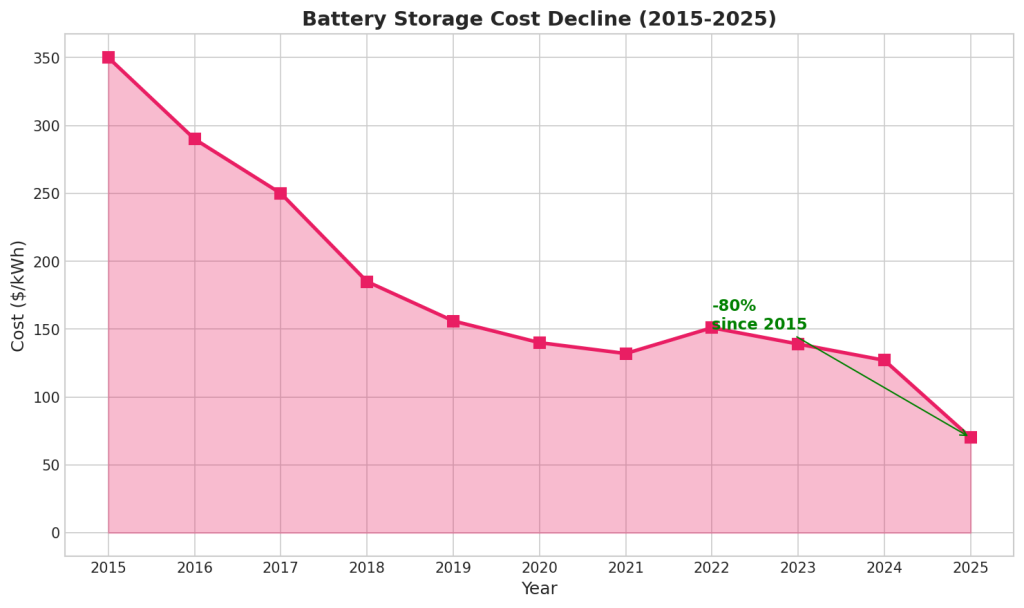
Data Source: BloombergNEF [17]
As the chart shows, the cost of lithium-ion battery packs has fallen by a remarkable 80% since 2015, dropping to just $70/kWh in 2025 [17]. This has made residential battery storage systems more accessible than ever before.
Pairing a battery with your solar system unlocks a new level of energy independence and economic optimization. It allows you to maximize your self-consumption of solar energy, reducing your reliance on the grid and protecting you from changes to net metering policies. In the event of a power outage, a battery can provide seamless backup power, keeping your lights on and your essential appliances running.
The Smart Consumer’s Guide to Renewable Energy
As we’ve seen, the economics of renewable energy are far more nuanced than the simple sticker price of a solar panel. The true financial picture is a complex interplay of falling hardware costs, the hidden expenses of grid integration, a powerful array of financial incentives, and the long-term value of energy independence. For you, the consumer, navigating this landscape requires a shift in perspective: from simply buying electricity to making a strategic, long-term investment in your energy future. By understanding the hidden economics at play, you can move beyond the headlines and make a data-driven decision that maximizes your financial returns and secures your energy independence for decades to come.
The Future of Renewable Energy Economics: What to Watch For
The economic landscape of renewable energy is not static. It is a dynamic and rapidly evolving field, with new technologies and business models emerging that promise to further disrupt the traditional energy sector. As a savvy consumer, understanding these future trends is key to positioning yourself to take advantage of the next wave of innovation.
Vehicle-to-Grid (V2G) Technology
One of the most exciting developments on the horizon is Vehicle-to-Grid (V2G) technology. With the rapid adoption of electric vehicles (EVs), we are essentially putting massive, mobile batteries in millions of garages. V2G technology allows these EV batteries to not only draw power from the grid but also to discharge power back into it. This creates a vast, distributed energy storage network that can be used to balance the grid, provide ancillary services, and even generate revenue for EV owners.
Imagine a future where your car doesn’t just get you from point A to point B, but also acts as a mini power plant for your home and the grid. During periods of low demand and high solar generation, your EV charges up. During peak demand in the evening, your car can power your home or sell its stored energy back to the utility at a premium. This creates a powerful new economic incentive for EV ownership and further enhances the value proposition of home solar and storage.
The Rise of Green Hydrogen
Green hydrogen, produced by splitting water using renewable electricity, is another technology poised to reshape the energy landscape. While still in its early stages, green hydrogen has the potential to decarbonize hard-to-abate sectors like heavy industry and long-haul transportation. For the consumer, the rise of green hydrogen could create new opportunities for energy independence and economic participation. In the long term, we may see the development of home-scale hydrogen electrolyzers that can produce hydrogen from excess solar energy, providing a long-duration storage solution that can be used for heating, transportation, or electricity generation.
The Role of Artificial Intelligence
Artificial intelligence (AI) is already playing a crucial role in optimizing the performance of renewable energy systems. AI-powered software can forecast weather patterns with incredible accuracy, allowing grid operators to predict solar and wind generation with greater certainty. This reduces the need for expensive spinning reserves and improves the overall efficiency of the grid. For the homeowner, AI-powered home energy management systems can automatically optimize the use of solar, batteries, and smart appliances to minimize electricity costs and maximize savings.
As these technologies mature and become more widespread, they will further enhance the economic advantages of renewable energy, creating new opportunities for consumers to take control of their energy future and participate in the transition to a clean energy economy.
Navigating the Policy Maze: How Regulations Shape Your Solar Investment
The economics of renewable energy are not shaped by market forces alone. Government policies and utility regulations play a decisive role in determining the financial viability of a solar investment for consumers. Understanding this complex and often contentious policy landscape is essential for anyone considering a move to renewable energy.
The Battle Over Net Metering
At the heart of the policy debate is net metering, a billing mechanism that credits solar owners for the excess electricity they send back to the grid. For years, most states have offered retail-rate net metering, meaning you get credited at the same price you pay for electricity from the utility. This has been a powerful driver of residential solar adoption, as it allows homeowners to effectively “spin their meter backward” and receive full value for their solar generation.
However, as the penetration of rooftop solar has grown, utilities have begun to push back against retail-rate net metering. They argue that it shifts the cost of maintaining the grid onto non-solar customers, as solar owners are using the grid as a giant, free battery without paying their fair share for its upkeep. This has led to a wave of policy battles in state legislatures and public utility commissions across the country, with utilities proposing to replace net metering with alternative structures that offer lower compensation for exported solar energy.
One common alternative is a “net billing” or “buy-all, sell-all” arrangement. Under this model, you buy all of your electricity from the utility at the retail rate and sell all of your solar generation to the utility at a lower, wholesale or “avoided cost” rate. This can significantly reduce the financial return of a solar investment and extend the payback period. California’s transition to its NEM 3.0 policy is a prime example of this shift, and it has had a chilling effect on the state’s residential solar market.
Table 4: Net Metering vs. Net Billing – A Simplified Comparison
| Feature | Net Metering (Retail Rate) | Net Billing (Avoided Cost Rate) |
| Export Credit | Full retail rate (e.g., $0.25/kWh) | Wholesale/Avoided cost rate (e.g., $0.05/kWh) |
| Payback Period | Shorter (e.g., 5-10 years) | Longer (e.g., 10-15+ years) |
| Incentive for Storage | Lower | Higher (to maximize self-consumption) |
| Utility Perspective | Unfavorable (lost revenue) | Favorable (lower costs) |
As a consumer, it is critical to understand the specific net metering or net billing rules in your state and with your utility. These policies can have a greater impact on the financial outcome of your solar investment than almost any other factor.
The Importance of Interconnection Standards
Another critical, yet often overlooked, area of policy is interconnection standards. These are the technical and procedural rules for connecting your solar system to the grid. Onerous, slow, or expensive interconnection processes can create significant barriers to solar adoption. The “soft costs” associated with navigating these bureaucratic hurdles can add thousands of dollars to the cost of an installation and create frustrating delays for customers.
Recognizing this, many states and municipalities are working to streamline their interconnection processes, adopting standardized procedures and automated online portals. These efforts, often supported by technical assistance from the Department of Energy, are crucial for reducing the soft costs of solar and making it more accessible and affordable for everyone.
The Future of Renewable Energy Policy
The policy landscape for renewable energy is in constant flux. The expiration of the federal ITC for residential solar, the ongoing battles over net metering, and the emergence of new technologies like V2G will continue to reshape the economic and regulatory environment. Staying informed about these changes and advocating for policies that support consumer-owned renewable energy will be essential for ensuring a just and equitable transition to a clean energy future.
Original Analysis: The Consumer’s Decision Matrix for Solar Adoption
To synthesize these complex economic factors into a practical decision-making tool, you can use a consumer’s decision matrix. This framework helps you evaluate a solar investment based on your specific financial situation, location, and personal priorities. It moves beyond a simple payback calculation to provide a more holistic view of the investment’s value.
Table 5: The Solar Decision Matrix
| Factor | High Priority (Weight: 3) | Medium Priority (Weight: 2) | Low Priority (Weight: 1) |
| Financial Return | Short payback period (<8 years), high lifetime savings (>$100k) | Moderate payback (8-12 years), significant savings ($50k-$100k) | Long payback (>12 years), modest savings (<$50k) |
| Energy Independence | Desire for off-grid capability, resilience to outages | Reducing reliance on utility, predictable energy costs | Minimal concern about grid dependence |
| Environmental Impact | Strong commitment to reducing carbon footprint | Desire to use clean energy | Environmental concerns are not a primary driver |
| Home Value Increase | Planning to sell home in the medium term, maximizing resale value | Long-term homeowner, value increase is a secondary benefit | No plans to sell, home value is not a major consideration |
| Upfront Cost | Ability to pay cash, comfortable with large investment | Prefer low-interest financing, moderate upfront cost | Require zero-down financing options (loan, lease, or PPA) |
How to Use the Matrix:
- Assign Priorities: For each factor, decide if it is a high, medium, or low priority for you and assign the corresponding weight (3, 2, or 1).
- Score Your Situation: Based on your research into your local market (electricity rates, incentives, installation costs), score your potential solar project for each factor on a scale of 1 to 5 (1 being least favorable, 5 being most favorable).
- Calculate Weighted Score: For each factor, multiply your score by the weight you assigned. Sum the weighted scores to get your total Solar Adoption Score.
A higher score indicates a stronger alignment between a solar investment and your personal and financial goals. This matrix forces a more disciplined and comprehensive evaluation, ensuring you consider all the hidden economic variables before making a decision.
A New Era of Energy Economics
The transition to renewable energy represents a fundamental paradigm shift in how we produce, consume, and think about electricity. For decades, consumers were passive ratepayers, subject to the whims of monopolistic utilities and volatile fossil fuel markets. Today, you have the opportunity to become an active participant in a decentralized, democratized energy system.
The hidden economics of renewable energy reveal a landscape of both challenges and immense opportunities. The costs of grid integration and the complexities of policy are real hurdles that must be addressed. But the financial rewards—in the form of tax incentives, soaring home values, and decades of free electricity—are equally real and far more impactful for the individual consumer. By looking beyond the sticker price and understanding the full economic picture, you can make a strategic investment that not only delivers significant financial returns but also provides energy independence, price stability, and a more sustainable future for generations to come. The era of the passive energy consumer is over; the era of the empowered energy investor has begun.
Community Solar: Expanding Access and Unlocking New Economic Models
While rooftop solar has been the primary driver of residential renewable energy adoption, a significant portion of the population is unable to install their own solar panels. This includes renters, apartment dwellers, and homeowners with unsuitable roofs. For these individuals, community solar has emerged as a powerful alternative, unlocking the economic benefits of renewable energy for a much broader audience.
Community solar allows multiple participants to subscribe to a single, larger solar facility and receive credits on their electricity bills for their share of the power produced. This model effectively democratizes access to solar energy, allowing anyone with an electricity bill to participate in the clean energy transition and save money on their energy costs.
The Economics of Community Solar
From a consumer’s perspective, the economics of community solar are straightforward and attractive. There are typically no upfront costs, and subscribers can expect to see immediate savings on their monthly electricity bills. The savings are generated by purchasing solar credits from the community solar project at a discount to the utility’s retail electricity rate. For example, a subscriber might pay $0.90 for a solar credit that is worth $1.00 on their utility bill, resulting in a 10% net savings.
For developers, community solar projects offer a number of advantages over traditional utility-scale or residential solar. They can be built on a wider variety of sites, including landfills, brownfields, and large commercial rooftops. They also benefit from economies of scale, with lower installation costs per watt than residential systems. This allows them to offer competitive pricing to subscribers while still generating a healthy return for investors.
A New Frontier for Local Economies
Beyond the direct savings for subscribers, community solar projects can be a significant boon for local economies. They create local construction and maintenance jobs, generate lease payments for landowners, and contribute to the local tax base. A 2025 study on the potential economic impact of community solar in Washington State found that a robust community solar program could generate $1.76 billion in economic benefits and create over 16,500 jobs [18].
Furthermore, community solar can be a powerful tool for advancing energy equity. Many states are now designing their community solar programs with specific carve-outs for low- and moderate-income (LMI) subscribers, ensuring that the benefits of clean energy are shared by all members of the community. These programs often offer deeper discounts and more flexible subscription terms for LMI households, helping to alleviate energy burden and create a more inclusive clean energy economy.
As the policy landscape continues to evolve, community solar is poised for significant growth. It represents a critical third pillar of the renewable energy market, alongside residential and utility-scale solar, and it will play an increasingly important role in making the economic benefits of clean energy accessible to everyone.
Financing Your Solar Investment: A Critical Economic Decision
While the long-term savings from solar are compelling, the upfront cost of a residential solar system—often ranging from $15,000 to $30,000 or more—can be a significant barrier for many homeowners. Fortunately, a variety of financing options have emerged to make solar more accessible, each with its own set of economic implications. Choosing the right financing method is just as critical as choosing the right panels or installer, as it will profoundly impact your payback period, total lifetime savings, and overall return on investment.
Cash Purchase: The Path to Maximum Returns
For those who have the available capital, a direct cash purchase is the most financially advantageous way to go solar. By paying for the system upfront, you avoid all interest costs and financing fees, which means you will have the shortest possible payback period and the highest possible lifetime savings. All the financial benefits of the system—the energy savings, the tax credits, and any SREC income—flow directly to you from day one. A cash purchase is the most straightforward path to maximizing your solar ROI.
Solar Loans: Immediate Savings with No Upfront Cost
For the majority of homeowners who prefer not to tie up a large amount of capital, solar loans have become the most popular financing option. These loans allow you to install a solar system with little or no money down and replace your monthly utility bill with a predictable monthly loan payment. The key to a financially successful solar loan is to ensure that your monthly loan payment is lower than your average monthly electric bill. This allows you to be cash-flow positive from the very first month, enjoying immediate savings even while you are paying off the system.
There are two main types of solar loans: secured and unsecured. Secured loans, such as a home equity loan or a home equity line of credit (HELOC), use your home as collateral and typically offer lower interest rates. Unsecured loans do not require collateral but may come with slightly higher interest rates. Many solar installers have partnerships with lenders who specialize in solar financing, offering competitive rates and terms specifically designed for solar projects.
When evaluating a solar loan, it’s crucial to look beyond the interest rate and consider the loan term, any dealer fees, and whether there are prepayment penalties. A longer loan term will result in a lower monthly payment but higher total interest costs over the life of the loan. Dealer fees, which are often baked into the loan amount, can add several thousand dollars to the total cost of your system. Understanding all these variables is essential for accurately calculating your true cost of financing.
Leases and Power Purchase Agreements (PPAs): The Hassle-Free Option
For those who are primarily interested in saving money on their electricity bills without any of the responsibilities of system ownership, a solar lease or a Power Purchase Agreement (PPA) can be an attractive option. Under these third-party ownership models, a solar company installs and owns the solar panels on your roof, and you simply pay them a fixed monthly rate for the electricity the system produces. This rate is typically lower than what you would pay your utility, so you start saving money immediately with no upfront investment.
Table 6: Comparison of Solar Financing Options
| Feature | Cash Purchase | Solar Loan | Lease / PPA |
| Upfront Cost | High | Low to None | None |
| Ownership | You own the system | You own the system | Third-party owns the system |
| Tax Credits | You receive the credits | You receive the credits | The third-party owner receives the credits |
| Lifetime Savings | Highest | High | Moderate |
| Payback Period | Shortest | Moderate | N/A (Immediate savings) |
| Maintenance | Your responsibility | Your responsibility | Third-party responsibility |
| Home Value | Significant increase | Significant increase | May complicate home sale |
While leases and PPAs offer the allure of immediate savings and hassle-free maintenance, it’s important to understand the trade-offs. Because you do not own the system, you are not eligible to claim the federal tax credit or any other ownership-based incentives. Your total lifetime savings will be significantly lower than with a cash purchase or a loan. Additionally, a solar lease or PPA can sometimes complicate the sale of your home, as the new owner must be willing and able to assume the terms of the agreement.
Ultimately, the best financing option depends on your individual financial situation and priorities. If maximizing your long-term financial return is your primary goal, a cash purchase is the clear winner. If you want to own your system and benefit from tax credits but prefer to avoid a large upfront investment, a solar loan is an excellent choice. And if your main objective is to simply lower your monthly electricity bills with no money down and no maintenance worries, a lease or PPA can be a viable and effective solution.
Your Role in the New Energy Economy
The transition to renewable energy is more than just a technological shift; it is a fundamental reordering of our economic and social relationship with energy. For the first time in a century, the power to generate electricity is being placed directly in the hands of consumers. This is a profound and empowering change, but it also comes with a new set of responsibilities and a steep learning curve.
The hidden economics of renewable energy, as we have explored, are a complex tapestry of costs and benefits, risks and rewards. The sticker price of a solar panel is merely the entry point to a much deeper and more consequential financial ecosystem. From the intricacies of grid integration and the battles over net metering to the powerful tailwinds of tax incentives and rising home values, the forces shaping your energy future are multifaceted and constantly in motion.
To navigate this new world successfully, you must become more than just a consumer; you must become an informed energy investor. This requires a commitment to research, a willingness to engage with complex data, and a clear-eyed assessment of your own financial goals and priorities. The Solar Decision Matrix provided in this article is a starting point for this journey, a tool to help you structure your thinking and make a decision that is right for you.
Ultimately, the choice to embrace renewable energy is a choice to take control. It is a choice to insulate yourself from the volatility of fossil fuel markets, to invest in an asset that will appreciate in value, and to contribute to a cleaner, more sustainable world. The path is not without its complexities, but for the informed and proactive consumer, the rewards—both financial and otherwise—are immense. The new energy economy is here, and it is waiting for you to claim your stake.
References
[1] Wood Mackenzie. (2025, October 22). Renewable levelized cost of electricity competitiveness reaches new milestone across global markets in 2025. https://www.woodmac.com/press-releases/renewable-levelized-cost-of-electricity-competitiveness-reaches-new-milestone-across-global-markets-in-2025/
[2] Lazard. (2025, June 16). Lazard’s Levelized Cost of Energy+. https://www.lazard.com/media/uounhon4/lazards-lcoeplus-june-2025.pdf
[3] BloombergNEF. (2025, February 6). Global Cost of Renewables to Continue Falling in 2025 as China Extends Manufacturing Lead. https://about.bnef.com/insights/clean-energy/global-cost-of-renewables-to-continue-falling-in-2025-as-china-extends-manufacturing-lead-bloombergnef/
[4] International Renewable Energy Agency. (2025, June). Renewable Power Generation Costs in 2024. https://www.irena.org/Publications/2025/Jun/Renewable-Power-Generation-Costs-in-2024
[5] Texas Public Policy Foundation. (2025, April 9). What Are the ‘Hidden Costs’ of Renewable Energy? https://eepower.com/tech-insights/what-are-the-hidden-costs-of-renewable-energy/
[6] North American Electric Reliability Corporation. (2022). Ancillary Services and Their Role in Grid Reliability. https://www.nerc.com/
[7] EnergySage. (2025, November 7). Federal Solar Tax Credit In 2025: How Does it Work? https://www.energysage.com/solar/solar-tax-credit-explained/
[8] Internal Revenue Service. (2025). Residential Clean Energy Credit. https://www.irs.gov/credits-deductions/residential-clean-energy-credit
[9] DSIRE. (2026). Database of State Incentives for Renewables & Efficiency. https://www.dsireusa.org/
[10] SolarReviews. (2025). Homes with Solar Sell for 6.9% More [2025 Zillow Data]. https://www.solarreviews.com/blog/solar-home-value-report
[11] U.S. Department of Energy. (2025). Do Solar Panels Increase Home Value? https://solutions.dominionenergy.com/blog/do-solar-panels-increase-home-value/
[12] EnergySage. (2025, November 13). Solar Payback Period: How Soon Will It Pay Off? https://www.energysage.com/solar/understanding-your-solar-panel-payback-period/
[13] U.S. Energy Information Administration. (2025, December 23). Electric Power Monthly. https://www.eia.gov/electricity/monthly/epm_table_grapher.php?t=table_5_03
[14] Empire Solar NY. (2025, May 9). Real NY Solar Case Study: How Jeff Saved $174,000+ with Empire Solar. https://empiresolarny.com/ny-solar-case-study/
[15] Illinois Shines. (2025, May). Case Study: Palestine, IL School District. https://illinoisshines.com/wp-content/uploads/2025/05/Illinois-Shines-Case-Study-Palestine-IL-School-District-1May2025.pdf
[16] U.S. Department of Energy. (n.d.). Solar Soft Costs Basics. https://www.energy.gov/eere/solar/solar-soft-costs-basics
[17] BloombergNEF. (2025, December 9). Lithium-Ion Battery Pack Prices Fall to $108 Per Kilowatt-Hour Despite Rising Metal Prices. https://about.bnef.com/insights/clean-transport/lithium-ion-battery-pack-prices-fall-to-108-per-kilowatt-hour-despite-rising-metal-prices-bloombergnef/
[18] University of Washington. (2025, January). Economic Impact Analysis of Community Solar Programs for the State of Washington. https://uil.be.uw.edu/wp-content/uploads/sites/58/2025/01/Economic-Impact-Analysis-of-Community-Solar-Programs-for-the-State-of-Washington.pdf

Lee Fondiller is a seasoned operations executive with over 20 years of experience in technology and sustainability. As COO of Solar4Pools, he leads innovation in the renewable energy industry with a focus on solar-powered solutions.