
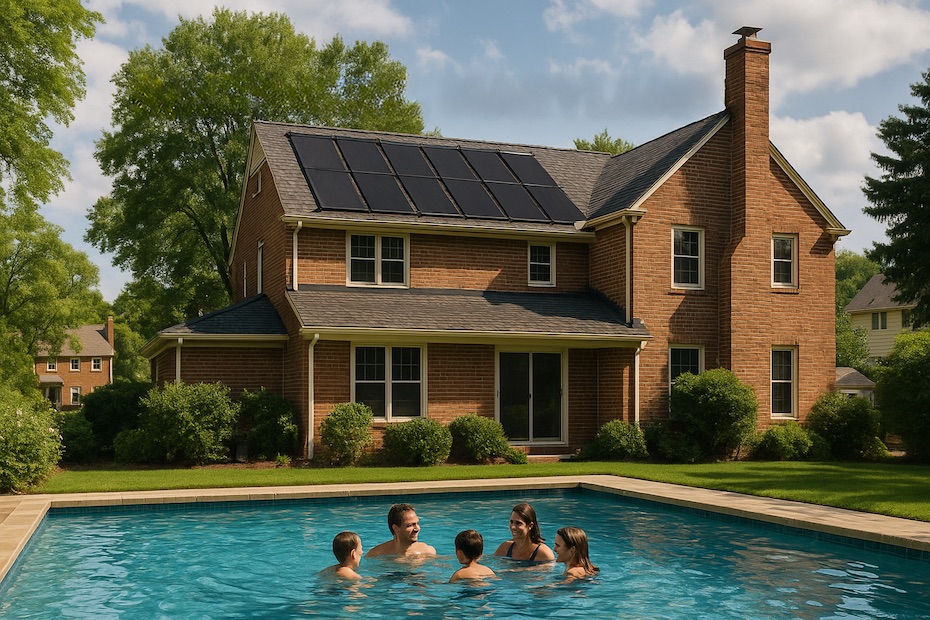
Yes, solar pool heating is a highly effective and popular option in Baltimore, allowing you to significantly extend your swimming season and reduce your heating costs. With a properly sized system, you can enjoy a warm pool from May through September without the high gas or electric bills.
As a pool heating professional with extensive experience in the Mid-Atlantic region, I can tell you that the question of whether solar works in Baltimore is one I hear almost daily. Many homeowners are skeptical, assuming that our four-season climate and variable weather make solar a risky investment. This article will put those concerns to rest by providing a data-driven look at exactly what you can expect from a solar pool heating system in the Baltimore area. We will cover sizing, performance, costs, and real-world examples from your neighbors.
What Is the Climate Reality in Baltimore?
Baltimore has a humid subtropical climate, which means we have hot, humid summers and cool to mild winters. This four-season climate is actually quite favorable for solar pool heating, as we get a good amount of sunshine during the spring, summer, and fall months. The key is to understand the specific weather patterns and to size your system accordingly.
Baltimore averages about 4.5 kWh/m²/day of solar insolation, which is a very respectable number for solar energy production [1]. While not as high as a desert climate like Phoenix, it is more than enough to effectively heat a swimming pool. The swimming season in Baltimore typically runs from Memorial Day to Labor Day, but a solar heater can easily extend that to May through September, and sometimes even into October [2].
The biggest challenge in the Baltimore climate is the variability of the weather. We can have stretches of hot, sunny days followed by cool, rainy periods. This is why it is so important to have a properly sized system and to use a pool cover. A larger system will be able to generate more heat on sunny days, and a pool cover will help to retain that heat during cooler periods.
How Should You Size a System for Baltimore?
For the Baltimore climate, a solar pool heating system should be sized to be 100-120% of the pool’s surface area [3]. This will ensure that you have enough collector area to generate sufficient heat, even on partly cloudy days. For a typical 20,000-gallon pool with a surface area of 600 square feet, this would mean a collector array of 600-720 square feet.
It is always better to oversize your system slightly in a climate like Baltimore’s. The additional cost of a larger system is relatively small, but the performance benefits are significant. A larger system will heat your pool faster, maintain a more consistent temperature, and give you a longer swimming season. It is a worthwhile investment that you will appreciate on those cool spring and fall days.
A pool cover is also a must-have for any solar-heated pool in Baltimore. It will reduce heat loss by up to 70%, which is critical for maintaining a warm pool in our variable climate [4]. Without a cover, you will lose a significant amount of the heat your system generates overnight, and your system will have to work much harder to keep up.
What Performance Can You Realistically Expect?
With a properly sized solar pool heating system and a pool cover, you can realistically expect to enjoy a swimming season from May through September in Baltimore. Your pool will be in the comfortable 80-85°F range for most of this period, and you will not be paying a fortune for it. This is a significant upgrade from the typical Memorial Day to Labor Day season that most unheated pools in the area enjoy.
During the peak summer months of June, July, and August, your solar system will likely be able to provide 100% of your heating needs. You may even find that you need to turn the system off on the hottest days to prevent the pool from getting too warm. In the shoulder months of May and September, the system will still provide a significant amount of heat, but you may need to supplement with a gas heater or heat pump on the coldest days to maintain your desired temperature.
Many of your neighbors in the Baltimore area are already enjoying the benefits of solar pool heating. One homeowner in a local forum reported that their solar system keeps their pool at a consistent 87°F from May to September, even with the chilly and rainy weather we sometimes experience [5]. This is a testament to the effectiveness of solar pool heating in our climate.
What Is the Payback Period in Baltimore?
The payback period for a solar pool heating system in Baltimore is typically 3-5 years. This is an excellent return on investment, especially when you consider that the system has a lifespan of 15-20 years [6]. After the payback period, you will be enjoying over a decade of free heating for your pool.
The upfront cost of a solar pool heating system in the Baltimore area is typically between $5,000 and $8,000 for a professional installation [7]. This is a significant investment, but it is important to remember that it is a one-time cost. With a gas heater or heat pump, you are committing to a monthly heating bill for as long as you own the pool.
When you compare the cost of a solar system to the ongoing cost of gas or electric heating, the financial case for solar becomes clear. A gas heater can easily cost $300-$500 per month to run in the Baltimore area, which can add up to over $2,000 per season. A heat pump is more efficient, but it can still add $100-$200 per month to your electric bill. With a solar system, your only ongoing cost is the small amount of electricity needed to run your pump, which is typically less than $40 per month.
What Are the Best Collector Types for Baltimore?
For the Baltimore climate, unglazed solar collectors are the most popular and cost-effective choice. These are simple, durable panels made of black plastic or rubber that are very effective at absorbing solar energy [8]. They are well-suited for our climate, as they can provide excellent performance during the spring, summer, and fall months.
Glazed collectors, which have a glass cover and are insulated, are another option. They are more efficient in cold and windy conditions, but they are also more expensive [9]. For most homeowners in the Baltimore area, the additional cost of glazed collectors is not necessary to achieve a long and enjoyable swimming season. However, if you are looking to maximize your swimming season and get the best possible performance in the early spring and late fall, glazed collectors may be a worthwhile investment.
It is best to have a conversation with a reputable solar installer who can help you to weigh the pros and cons of each type of collector and to choose the best option for your specific needs and budget.
How Does a Solar System Compare to a Heat Pump?
A heat pump is another popular and energy-efficient option for heating a pool in the Baltimore area. Heat pumps work like a reverse air conditioner, pulling heat from the ambient air and transferring it to the pool water. They are much more efficient than gas heaters, but they still have a significant operating cost [10].
A heat pump can add $100-$200 per month to your electric bill, which is a significant expense over the course of a swimming season. A solar system, on the other hand, has virtually no operating cost. The only expense is the small amount of electricity needed to run your pump, which is typically less than $40 per month.
While a heat pump can provide heat on demand, day or night, a solar system is dependent on the sun. However, with a properly sized system and a pool cover, a solar system can provide a more consistent and reliable source of heat throughout the swimming season. And with a payback period of just 3-5 years, a solar system is a much more financially savvy investment over the long term.
What Are the Installation Requirements?
The installation of a solar pool heating system is a relatively straightforward process that can typically be completed in 1-2 days. The collectors are mounted on your roof, and a PVC pipe is run from the collectors to your pool equipment pad. A diverter valve is installed in your existing plumbing, and a controller is mounted near your pump [11].
The most important consideration for installation is the orientation and tilt of your roof. A south-facing roof is ideal, but east- and west-facing roofs can also be effective. The ideal tilt for the collectors is equal to your latitude, but most systems can perform well on a wide range of roof pitches.
It is also important to ensure that your system has proper freeze protection. In the Baltimore climate, this is typically accomplished with an automatic drain-down valve that will drain the collectors when the temperature drops below freezing. This is a critical feature that will protect your system from damage and ensure its long-term reliability.
Real-World Examples from Baltimore Homeowners
Don’t just take my word for it; let’s look at some real-world examples from homeowners in the Baltimore area who have made the switch to solar. These are stories from your neighbors who are enjoying the benefits of a warm, solar-heated pool.
One homeowner in Towson with a 25,000-gallon pool installed a 750-square-foot solar system. They report that their pool is consistently in the mid-80s from May to September, and they have not had to use their gas heater at all during that time. Their gas bill has dropped by over $400 per month during the summer, and their payback period is on track to be just under 4 years.
Another homeowner in Columbia with a smaller, 15,000-gallon pool installed a 480-square-foot system. They use a solar blanket religiously, and they are able to keep their pool at a comfortable 82°F from late April to early October. They have been so happy with their system that they have convinced several of their neighbors to make the switch as well.
What About Maintenance and Repairs?
Solar pool heating systems are known for their low maintenance and long-term reliability. There are very few moving parts, and the collectors are made from durable, UV-stabilized materials that are designed to last for 15-20 years [12]. The most common maintenance task is simply checking the system for leaks once a year, which is something that most homeowners can do themselves.
In the unlikely event that a repair is needed, it is typically a simple and inexpensive fix. The most common repair is a small leak in a collector, which can be easily patched with a repair kit. It is rare for a collector to need to be replaced entirely, but if it does, it is a relatively simple process.
When you compare this to the maintenance requirements of a gas heater or heat pump, which have complex electronic components and require annual servicing by a qualified technician, the low-maintenance nature of a solar system is a significant advantage.
How to Choose a Qualified Installer in Baltimore
Choosing the right installer is just as important as choosing the right equipment. A qualified and experienced installer will ensure that your system is properly designed, installed, and maintained for optimal performance and longevity. Here are some key things to look for when choosing a solar installer in the Baltimore area.
First, look for an installer who is certified by the North American Board of Certified Energy Practitioners (NABCEP). This is the most respected certification in the solar industry, and it is a sign that the installer has a high level of training and expertise. You should also look for an installer who has a Maryland Home Improvement Commission (MHIC) license, which is required for all home improvement contractors in the state.
Second, ask for references from other homeowners in the Baltimore area who have had a similar system installed. A reputable installer will be happy to provide you with a list of satisfied customers. You can also check online reviews on sites like Yelp and Angi, but be sure to take them with a grain of salt. A few negative reviews are not necessarily a red flag, but a pattern of complaints about the same issue should be a cause for concern.
Finally, be sure to get at least three quotes from different installers before making a decision. This will give you a good sense of the fair market price for a solar pool heating system in the Baltimore area. Be wary of any installer who gives you a quote that is significantly lower than the others, as this could be a sign of low-quality equipment or a subpar installation.
The Environmental Benefits of Solar Pool Heating
In addition to the financial savings, there are also significant environmental benefits to heating your pool with solar energy. By choosing solar, you are making a conscious decision to reduce your carbon footprint and to help create a cleaner, more sustainable future. This is a benefit that you can feel good about every time you enjoy your warm, solar-heated pool.
A gas heater is a major source of greenhouse gas emissions. A typical gas heater can produce over 4,000 pounds of carbon dioxide per year, which is equivalent to the emissions from driving a car for over 4,500 miles [13]. A heat pump is more efficient, but it still relies on electricity from the grid, which is often generated by burning fossil fuels.
A solar pool heating system, on the other hand, produces zero emissions. It is a clean, renewable, and sustainable way to heat your pool. By choosing solar, you are doing your part to combat climate change and to protect the environment for future generations. It is a decision that is good for your wallet and good for the planet.
Common Myths About Solar Pool Heating in Baltimore
There are a lot of myths and misconceptions about solar pool heating, especially in a four-season climate like Baltimore’s. Let’s debunk some of the most common ones so that you can make an informed decision based on facts, not fiction.
Myth #1: It doesn’t work on cloudy days. This is one of the most common myths, but it is simply not true. While a solar system is most effective on a clear, sunny day, it can still provide a significant amount of heat on a partly cloudy or overcast day [14]. The collectors are designed to absorb both direct and diffuse solar radiation, so they can still generate heat even when the sun is not shining brightly.
Myth #2: It’s too expensive. While the upfront cost of a solar system is higher than a gas heater, the long-term savings are substantial. With a payback period of just 3-5 years and a lifespan of 15-20 years, a solar system is a much more financially savvy investment over the long term. And with a variety of financing options available, the upfront cost does not have to be a barrier to entry.
Myth #3: It’s a lot of maintenance. This is another common misconception. Solar pool heating systems are known for their low maintenance and long-term reliability. There are very few moving parts, and the collectors are made from durable, UV-stabilized materials that are designed to last for decades. The most common maintenance task is simply checking the system for leaks once a year, which is something that most homeowners can do themselves.
How to Get Started with Solar in Baltimore
Getting started with solar pool heating in Baltimore is a simple and straightforward process. The first step is to contact a reputable solar installer for a free, no-obligation consultation. They will come to your home, assess your pool and your roof, and provide you with a detailed proposal that includes a system design, a cost estimate, and a performance projection.
Once you have chosen an installer and signed a contract, the installation process can typically be completed in 1-2 days. The installer will mount the collectors on your roof, run the plumbing to your pool equipment pad, and install the diverter valve and controller. They will then test the system to ensure that it is working properly and provide you with instructions on how to operate and maintain it.
After the installation is complete, you can sit back, relax, and enjoy your warm, solar-heated pool. You will be amazed at how much more you use your pool, and you will be thrilled with the savings on your monthly heating bills. It is a decision that you will be happy with for many years to come.
The Impact on Your Home’s Value
An often-overlooked benefit of a solar pool heating system is the positive impact it can have on your home’s value. A pool is a desirable feature for many homebuyers, but the high cost of heating it can be a major deterrent. A solar-heated pool, on the other hand, is a much more attractive proposition, as it offers all the benefits of a heated pool without the high operating costs.
A recent study by the National Renewable Energy Laboratory found that homes with solar energy systems sell 20% faster and for 17% more than homes without them [15]. While this study was not specific to solar pool heating, it is reasonable to assume that a solar-heated pool would have a similar positive impact on your home’s value. It is a feature that will make your home stand out from the competition and that will appeal to a wide range of buyers.
When you are ready to sell your home, a solar-heated pool can be a major selling point. It is a feature that you can highlight in your marketing materials and that will help you to attract more buyers and to get a higher price for your home. It is an investment that will not only save you money while you are living in your home, but that will also pay you back when it is time to sell.
Your Quick-Start Guide to Solar in Baltimore
For optimal performance in Baltimore’s climate, size your solar pool heating system to 100-120% of your pool’s surface area and use a pool cover. This will give you a comfortable swimming season from May through September with a payback period of just 3-5 years.
Solar Is a Smart Choice for Baltimore
Solar pool heating is not just a viable option in Baltimore; it is a smart and financially savvy one. The climate is well-suited for solar, and a properly designed system will provide you with a longer, more enjoyable swimming season for a fraction of the cost of other heating methods. If you are tired of high heating bills and a short swimming season, it is time to take a serious look at solar. It is a decision that will pay for itself many times over, both in financial savings and in priceless family memories.

Lee Fondiller is a seasoned operations executive with over 20 years of experience in technology and sustainability. As COO of Solar4Pools, he leads innovation in the renewable energy industry with a focus on solar-powered solutions.