
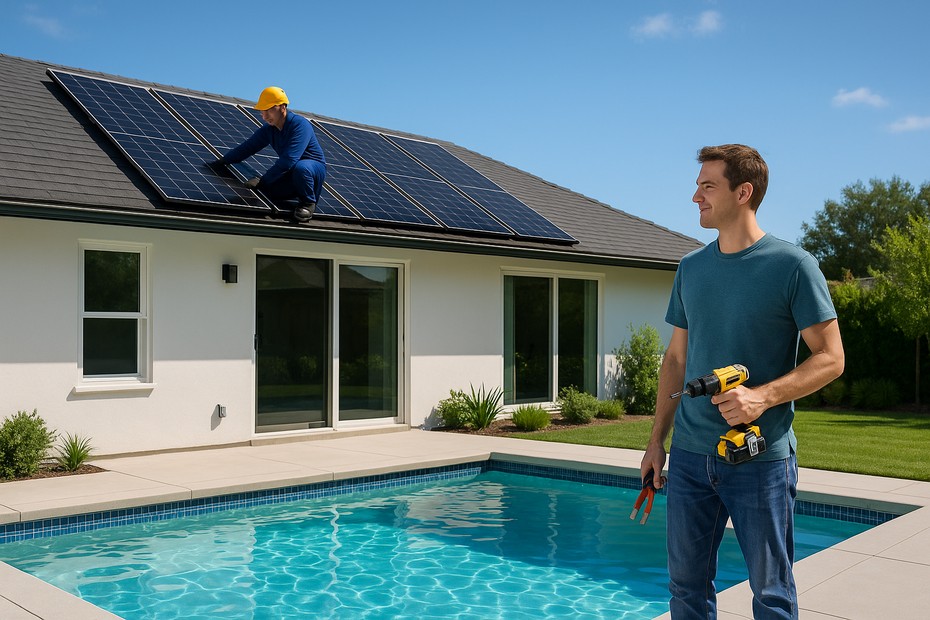
Professional vs. DIY Solar Pool Heater Installation: Which is Right for You?
Swimming in a warm pool without running up your utility bills is an enticing prospect. Solar pool heaters harness the sun’s free energy to extend your swimming season and reduce or even eliminate heating costs. But once you decide to go solar, you’re faced with a big decision: should you hire a professional installer or take the do‑it‑yourself route? Each option has its own set of benefits and challenges. This article breaks down the differences between professional and DIY solar pool heater installation so you can make an informed choice.
Understanding the two paths
At its core, a solar pool heater circulates pool water through solar collectors mounted on your roof or yard. The water absorbs heat from the sun and returns to the pool. Installing such a system involves choosing the right collectors, securing them in place, running plumbing from the pool filter to the collectors and back, and integrating the heater with your existing pump. A professional installer handles all these steps, while a DIY approach puts you in charge.
When evaluating which path suits you, consider three primary factors: cost, complexity and risk. The price difference between professional installation and DIY can be significant. HomeAdvisor reports that the average professionally installed solar pool heater costs about $4,500, with a range of $2,500 to $6,500 depending on system size and panel type. In contrast, Angi notes that DIY kits range from $1,000 to $3,500, but additional expenses for tools, plumbing supplies and permits can add to the bill. That initial savings is tempting, but it comes with increased responsibility.
Cost comparison: upfront and long‑term
Professional installation costs
Professional installers typically provide a turnkey service that includes equipment, labour, plumbing integration and permitting. Prices vary by region, collector type and pool size, but most professionally installed systems fall in the $2,500–$6,500 range. A more complex system with glazed collectors may exceed $7,000, while a simple unglazed setup for a small above‑ground pool might be closer to $3,000. The fee covers the contractor’s labour, insurance, warranty administration and overhead.
One advantage of hiring a professional is that they handle permits and inspections. In many jurisdictions, a licensed contractor or electrician is required to file for a solar building permit. The Enphase blog notes that local regulations ensure system safety and that failure to follow the permitting process can result in required removal and fines. A professional installer is familiar with these regulations and can ensure your system is up to code. They also have access to industry‑leading equipment and often receive better pricing on materials through wholesale channels.
DIY installation costs
Going DIY can save a substantial chunk of money. Angi reports that DIY kits cost between $1,000 and $3,500 and can reduce labour costs significantly. HomeAdvisor echoes this sentiment, noting that many DIY kits include the panels and instructions needed to build a functional system. However, these cost estimates don’t include tools you might need to buy or rent, nor do they account for permits and inspection fees. You’ll also need to purchase PVC or CPVC pipes, valves, fittings, sealant and insulation.
DIY savings mainly come from eliminating labour charges. According to solar industry research, labour and overhead can make up more than a quarter of the total cost of a solar project. By doing the work yourself, you effectively pocket that portion. Still, the price difference isn’t as wide as it first appears once you factor in your time. If you earn a high hourly wage or value your weekends, the hours spent on design, construction and troubleshooting could equate to lost income. Also, you may not be able to claim certain tax incentives or rebates if the system is not installed by a certified professional.
Operating costs and payback
Solar pool heaters use your existing pool pump to move water through the collectors, so operating costs are minimal. Most systems raise electricity usage by only about $10 to $25 per month. Gas and electric heaters, by contrast, can cost hundreds each month. Payback periods for professionally installed solar pool heaters typically range from two to seven years. Because a DIY system costs less to install, your payback period could be even shorter. However, if your system is undersized, incorrectly installed or prone to leaks, it may not perform efficiently enough to deliver the expected savings.
Skill requirements and project complexity
Installing a solar pool heater isn’t rocket science, but it does require a combination of skills. You must be comfortable working on a roof, understand basic plumbing, and be meticulous about sealing and support. Northern Lights Solar Solutions advises evaluating your roof’s exposure to sunlight, checking structural integrity and ensuring correct spacing and orientation of the panels. If you mount collectors on the roof, you’ll need to locate rafters, install brackets with flashing to prevent leaks and secure panels so they withstand wind. You’ll also run PVC pipes up and down the house or along a wall, install a diverter valve, and integrate the system with your pool filter. For ground‑mounted systems, you must build a sturdy frame and anchor it securely.
For many homeowners, the most intimidating tasks are working at height and plumbing. The Angi article warns that DIY installation can take several days and carries risks such as leaks, improper sizing and code violations. Mistakes may void your warranty or lead to costly repairs. Misaligned collectors can trap air, reduce flow and limit heat transfer. Improperly glued joints can leak. Over‑tightening clamps can crack headers. Connecting the plumbing incorrectly can short‑circuit the system, sending unheated water back to the pool.
Professional installers have spent years honing these skills. They know how to size the collector area relative to the pool, orient collectors for maximum sun, and balance flow rates. They also handle the electrical wiring for automatic controllers and ensure sensors are properly located. If your home is subject to building inspectors or homeowners’ association approvals, a licensed installer knows how to navigate those requirements. In short, professional installation trades money for experience and certainty.
Safety and liability
Safety is a prime consideration. A rooftop project requires climbing ladders, walking on pitched surfaces and using power tools. The Enphase article highlights several safety risks: inexperienced DIYers may damage their roof, equipment or themselves. Without proper guidance, you could also harm those nearby—dropped tools and pipes can injure someone below. Electrical work, if you integrate a controller, poses shock risks.
Legal issues are equally important. The Enphase blog notes that in many jurisdictions, you need a license to install solar equipment permanently and that a licensed electrician or contractor is almost always required to file for a solar permit in the United States. Failing to follow permitting processes for a DIY installation can result in fines or the authorities requiring you to remove the system. Insurance policies may not cover damages arising from unlicensed work. If you sell your home, a non‑permitted system could complicate the transaction or reduce your property value.
Professional installers carry liability insurance and workers’ compensation coverage. If something goes wrong during installation, the installer—not you—bears the financial risk. They also warrant their work and the equipment they install. That peace of mind is one of the key benefits of paying for professional help.
Quality, performance and warranty
Functionality and longevity are also part of the equation. A properly installed solar heater can last 15–20 years or even longer. Professional installers are able to choose high‑quality collectors and ensure they are securely mounted and properly plumbed. They will optimise panel orientation and tilt, which maximises sun exposure. They also know how to integrate automatic controls that turn the system on and off based on roof and pool temperatures, saving energy and enhancing performance.
DIY kits can perform just as well as professionally installed systems if they are assembled correctly. However, you must pay careful attention to panel placement and pipe routing. HomeAdvisor notes that mistakes in placement or routing can reduce performance or cause leaks. Because DIY kits are designed to be universal, they may not fit your roof perfectly; you may need to modify mounting hardware or adapt your plumbing to fit the kit’s connections. If you order a kit online, you may not get local support if something doesn’t work. In addition, some manufacturers offer limited or no warranty for self‑installed systems. This means you must foot the bill for any future issues.
Time investment and convenience
Time is money, and DIY installations require a significant investment of time. You will need to research local codes, choose a system, obtain permits, gather tools and materials, design the plumbing path, build the mounting structure, install the collectors, connect the plumbing, test the system and troubleshoot any issues. The Angi article estimates that DIY installation can take several days. If you’re inexperienced, expect to spend more time learning than installing.
Professional installers complete most installations in one day, sometimes two if the pool is large or the house has unusual roof angles. They have crews to carry panels up the roof, run pipes quickly and handle any unexpected issues on the spot. While the job may look easy in hindsight, the convenience of having someone else do the heavy lifting can be worth the extra cost, especially if you have limited free time or physical limitations.
Customisation and satisfaction
One of the joys of DIY is customisation. You control every aspect of the system design. If your roof has a unique shape or if you prefer to mount collectors on a pergola or fence, you can adapt the design. Homestars points out that DIY heaters are customisable for your specific needs and pool dimensions. You choose the collector type, layout and plumbing path. If you want to start small, you can install one or two panels and expand later. For above‑ground pools or spas, you might build a simple coil heater using black hose for less than $100. These coil heaters work by coiling black tubing on a sun‑exposed surface to warm water as it circulates. They are fun weekend projects that teach you about solar heating and allow you to dip your toe in the technology.
There’s also satisfaction in building something yourself. Many DIYers take pride in learning new skills and creating a system that reflects their ingenuity. A DIY installation can be a personal accomplishment, and you’ll understand every component of your heater if something goes wrong. Yet the same independence can be isolating. If you hit a snag, there may not be anyone to call for help. Online forums and manufacturer support lines can assist, but you might still spend hours diagnosing a problem that a professional would fix in minutes. Homestars even suggests that you might save money and energy by hiring a professional instead of doing it yourself—a point worth considering if you’re on the fence.
Warranty and rebate eligibility
Warranty coverage and eligibility for rebates or tax credits can sway your decision. Many manufacturers provide 10–12‑year warranties on solar collectors when they are installed by certified professionals. Self‑installed systems may carry shorter or limited warranties, or none at all. Professionals typically guarantee their workmanship for one to five years. If you do the work yourself and later discover a leak or panel failure, you may have no recourse but to pay for repairs or replacement.
Some incentive programs and rebates require installation by a licensed contractor. For instance, certain state solar incentives or utility rebates specify that a system must be installed by a qualified professional to qualify. Federal tax credits for solar thermal systems often require systems to meet specific standards. While self‑installed systems may still qualify, the paperwork and proof of compliance can be more complicated without a contractor’s documentation. Be sure to research incentives in your area and understand the qualification requirements before choosing the DIY route.
Real‑world examples and case studies
To illustrate how professional and DIY installations compare, let’s look at some real‑world cases. In the Wisconsin campground case study reported by a state agency, the Techno‑Solis solar pool heater system cost $1,862 for equipment and $2,982 for installation. The installation included mounting collectors on a building, connecting them to a 30‑watt pump, and integrating a control valve. The system provides 1200 kWh of heat annually and has a 25‑year lifespan. While this is not a backyard pool example, it shows the capital costs and suggests that professional labour made up nearly 60 percent of the total. A competent DIYer might reduce that labour cost by doing the roof mounting and plumbing themselves, lowering the total outlay.
Another source, HomeGuide, notes that a professionally installed solar pool heater costs between $2,500 and $6,500 and has a monthly operating cost of about $10–$25. Unglazed kits for DIY installation can cost as little as $1,000, though typical kits range up to $3,500. This means you could save a couple of thousand dollars on installation by doing it yourself. But you must factor in the value of your time and any tools you need to purchase.
Angi points out that professional installation offers peace of mind, ensures warranty protection and often delivers better long‑term performance. Meanwhile, HomeAdvisor notes that poorly placed panels and improperly routed pipes can reduce performance or cause leaks. These sources collectively suggest that DIY installations succeed when the installer has the right knowledge and skills, while professional installations provide more consistent results.
Advantages of professional installation
- Expertise and efficiency: Professionals design and size systems correctly, ensuring maximum efficiency. They know the local climate and can choose appropriate collectors and orientation. They also handle all plumbing and electrical integration quickly.
- Safety: Professionals have the training and equipment to work safely on roofs and with plumbing. They carry insurance, reducing your personal liability risk.
- Permitting and code compliance: Licensed installers handle permitting and understand local codes. They avoid mistakes that could lead to fines or forced removal.
- Warranty coverage: Manufacturers often require professional installation to honour their warranties. A pro will guarantee their workmanship and may offer extended warranties on equipment.
- Time savings: With a crew and experience, professionals complete installations quickly, typically within a day or two. You can start using your heated pool sooner without spending your free time on the roof.
- Access to better equipment: Installers often source commercial‑grade collectors and hardware at wholesale prices. These components may perform better and last longer than DIY kit parts.
Advantages of DIY installation
- Lower upfront cost: Eliminating labour reduces the price of the project. DIY kits are available for $1,000 to $3,500.
- Customisation: You choose the collector type, layout and location to suit your pool. Homestars lists customisation as a key benefit.
- Satisfaction and learning: Building your own system can be rewarding. You learn about solar heating and plumbing and can fix minor problems yourself.
- Scalability: You can start small and add panels over time, spreading out the cost. DIY coil heaters offer a cheap starting point and can heat small pools or spas using simple materials like black hose.
- Scheduling flexibility: You can work on your own timeline, not the contractor’s schedule. This may be helpful if you only have free time on weekends.
Disadvantages of professional installation
- Higher cost: Professional labour and overhead increase the upfront price, sometimes by several thousand dollars.
- Less personal control: You may have limited input on the design or layout. Installers generally follow standard practices and may not customise as much as a DIY builder.
- Contractor quality varies: Not all professionals are equally skilled. Choosing a qualified, experienced installer requires research and vetting. Get multiple quotes and check references.
Disadvantages of DIY installation
- Time and effort: The project can take days and involves physical labour. Mistakes can lead to leaks and inefficiencies.
- Risk of code violations: You must understand local codes and permitting. Missteps could result in fines or forced removal.
- Potential safety hazards: Working on a roof and handling plumbing can lead to injury or property damage.
- Limited warranty and support: Some manufacturers limit warranties on self‑installed systems. If something fails, repairs could be out of pocket.
- Performance uncertainty: Without experience, you may undersize or misalign the system, resulting in poor heating.
Common questions and answers
How much can I save by installing a solar pool heater myself? Savings come from eliminating labour costs, which may be a quarter of the total project cost. DIY kits cost around $1,000–$3,500. After adding tools and permits, you might save $1,000–$2,000 compared to professional installation, though your time investment reduces net savings.
Is DIY installation legal? It depends on local codes. Many jurisdictions require a licensed contractor or electrician to file for a solar permit. Always check with your building department before starting.
What skills do I need to install a solar pool heater? You should be comfortable working at height, drilling into roofs, running PVC plumbing and using basic hand tools. You also need to design a layout that maximises sun exposure and balances water flow.
Can I build a DIY heater for an above‑ground pool? Yes. Simple coil heaters made from black hose can raise water temperature for small pools. A 200‑foot coil can increase the output water to about 99 °F, but for larger in‑ground pools, you’ll need proper collectors.
Will a professionally installed system perform better? Generally yes. Professionals ensure correct sizing, orientation and integration, and they use high‑quality components. They also offer warranties and handle permits. A DIY system can perform well if built correctly, but there’s a greater chance of mistakes.
What maintenance is required? Both DIY and professional systems require occasional inspections, cleaning and seasonal shutdowns. Inspect connections annually, clear debris from collectors and drain water from panels in freezing climates. Professional installations may include maintenance services; DIY systems rely on you to monitor and repair issues.
Conclusion: deciding what’s right for you
Choosing between professional and DIY solar pool heater installation depends on your priorities. If you value cost savings, enjoy hands‑on projects and are comfortable with plumbing and roof work, a DIY project could be rewarding. You’ll save on labour and gain a sense of accomplishment. Just be prepared for the time commitment, permit research, and potential troubleshooting. Follow step‑by‑step guides and heed the cautionary notes about leaks and code compliance.
If you prioritise convenience, safety and guaranteed performance, hiring a professional may be worth the extra expense. Professionals ensure your system is correctly sized, securely mounted and compliant with local regulations. They offer warranties and can access higher‑quality components. For large or complex systems, or if your roof requires significant work, a professional installation is often the smarter choice. Ultimately, the right path is the one that aligns with your budget, skills and comfort level. With either route, you’ll enjoy the luxury of a warm pool heated by sunshine while keeping your energy bills low.

Lee Fondiller is a seasoned operations executive with over 20 years of experience in technology and sustainability. As COO of Solar4Pools, he leads innovation in the renewable energy industry with a focus on solar-powered solutions.