
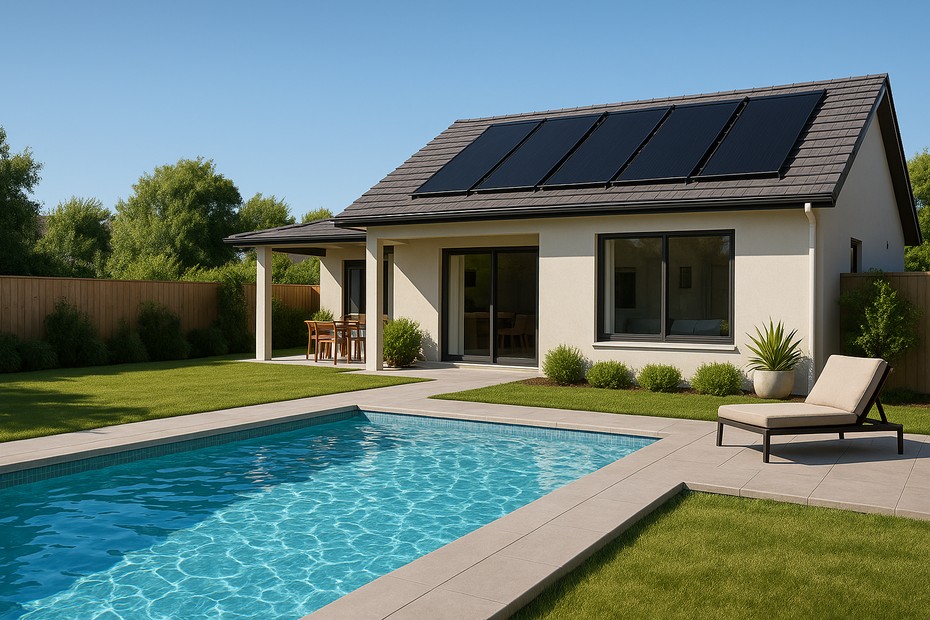
Solar pool heaters promise to make your outdoor swimming comfortable without the high energy bills. But just how warm can you expect the water to get? If you picture sauna‑like temperatures, you might be disappointed. Solar systems work very differently from gas or electric heaters, and understanding their realistic performance is key to enjoying your swimming season. In this guide, you’ll learn what temperatures are achievable, how long it takes to heat a pool, and the factors that influence water temperature. By the end, you’ll know how to set your expectations and get the most from your solar pool heater.
What “Comfortable” Means for Pool Temperatures
Before diving into how warm a solar heater can make your pool, it’s important to know what comfortable means in the first place. In the realm of swimming pools, comfort sits between mild and warm, but rarely hot. According to the U.S. Department of Energy, the typical range for pool water is 78–82 °F. Competitive swimmers train at around 78 °F, while children and older adults prefer water that is at least 80 °F. Each degree rise above this range increases energy consumption substantially; the Department of Energy notes that every degree can add 10–30 % more energy use.
When you evaluate pool heaters, consider the difference between the current pool temperature and your desired temperature. An unheated pool often stays about 8–12 °F colder than a solar‑heated pool on the same day. If you want your water around 82 °F, knowing the starting point (the unheated water temperature) helps determine whether solar alone can get you there.
Comfortable vs. Hot Pools
Solar heating does not boil your pool. Some control systems allow you to set a target as high as 40 °C (104 °F), but solar specialists, such as those at an Australian pool‑heating company, caution that 28 °C (82 °F) is a realistic goal for most of the year. Water at 104 °F would feel more like a hot tub and is neither practical nor safe for extended swimming. Solar panels can heat the water passing through them to much higher temperatures—flat collectors can reach 60 °C (140 °F) in direct sun—but that heat dilutes when mixed back into the entire pool.
Realistically, solar pool heaters raise the entire pool’s temperature by 8–12 °F above an unheated pool. That means if the water in an unheated pool is 70 °F on a sunny day, a well‑sized solar system can bring it to about 78–82 °F. On very sunny days, the difference can be more, but expecting a 20‑degree jump is usually unrealistic unless you start with cooler water and have a large collector area.
Real‑World Temperature Gains
Southwest Florida Example
A detailed comparison by the Florida Solar Design Group in Cape Coral shows how solar heating performs in real conditions. On a sunny day when air temperatures hit 91 °F, a shaded, unheated pool measured 73–74 °F. After running a properly sized solar heater, the pool warmed to 82–88 °F—a solid 9–14 °F increase. Even during a rare cold snap when unheated pools in the region cooled to 66 °F, solar‑heated pools still reached 74–78 °F. In spring and fall, solar systems pushed pool temperatures into the upper 80s, effectively extending the comfortable swimming season.
General Expectations
Most installers and product manuals echo the 8–12 °F figure. Solar Solutions, a supplier for Florida homeowners, states that most users see an increase of 8–12 degrees and that using a pool cover retains more heat and lengthens the season. The same figure appears on websites for installers in California and across the U.S., making it a widely accepted benchmark. An educational article from Alternative Energy Tutorials suggests that properly sized systems can raise pool temperature by 10–20 °F (5–10 °C) above the normal water temperature.
Can Solar Beat Conventional Heaters?
You might wonder if solar can take your pool well into the 90s, like gas or electric heaters can. The answer is mostly no. Solar heaters are limited by available sunlight and collector area. While flat‑plate collectors can heat water passing through them to 60 °C (140 °F), that heat is instantaneous and not sustained throughout the pool volume. Gas or electric units force heat into the water quickly and can maintain 90 °F or higher regardless of air temperature or clouds. With solar, surpassing about 88–90 °F is rare; once the pool reaches the mid‑80s, the rate of heat gain slows, and heat losses (from evaporation, wind, and radiation) balance the solar input.
Factors That Influence Temperature
1. Solar Collector Size and Type
The most important factor is the collector area relative to the pool’s surface area. Solar pool heating systems typically use either unglazed polypropylene panels or glazed collectors (sometimes with glass covers). Unglazed panels are less costly and work well when the average temperature remains above 50 °F. Glazed collectors are more efficient in cooler climates but cost more. Regardless of type, the rule of thumb is that the total collector area should be 60–100 % of the pool’s surface area. For cooler locations or when you want higher water temperatures, aim toward the higher end. A small collector area will struggle to provide more than a few degrees of warmth.
2. Orientation and Tilt
Collectors should face the sun most of the day, ideally south (north in the southern hemisphere), with minimal shading. The tilt angle is often set equal to the local latitude to maximize year‑round solar gain. Even a great system will underperform if it sits in shade from trees or other buildings for much of the day. A poorly oriented panel can reduce heat output by 20–40 %, meaning your pool warms far less.
3. Climate and Weather
Solar pool heaters rely completely on sunlight. In sunny climates like Florida, Arizona, and California, solar can raise temperatures 10–15 °F in a day or two. In cloudier or northern regions, the same system might only achieve 5–10 °F and take several days. Northern Lights Solar Solutions notes that small 10,000‑gallon pools in sunny regions gain 10–15 °F within 1–2 days, while larger pools take 2–4 days, and cooler regions may need 3–5 days. The system’s performance drops when days are shorter and colder, such as during winter or rainy seasons.
4. Pool Volume
More water means more heat is required to raise its temperature. A large 20,000‑gallon pool needs about twice the collector area of a 10,000‑gallon pool to achieve the same temperature rise. If you undersize your collectors, your pool may only warm a few degrees, even in sunny weather.
5. Pool Cover Use
Evaporation is the biggest source of heat loss for pools. A pool cover or solar blanket traps heat overnight, reducing evaporation and wind cooling. Without a cover, a pool can lose several degrees each night, meaning the solar system must work harder each day. Using a cover often improves overall heating by 3–5 °F and makes it easier to maintain the target temperature. That Pool Heating Company emphasizes that using a cover overnight makes it possible to achieve around 28 °C (82 °F) for most of the year. Solar Solutions also notes that a cover helps retain the 8–12 °F gained during the day.
6. Pump Run Time and Flow Rate
Running the pool pump during the sunniest part of the day maximizes heat transfer. Circulating water when panels are cool (e.g., early morning or evening) wastes energy because there is little heat to capture. Some solar controllers monitor panel temperature and turn the pump on only when the collector is warmer than the pool.
Flow rate matters too. A high flow cools panels but warms the pool slowly, whereas a lower flow raises panel temperature and heats water more per pass. Installers often aim for a flow that yields a 5–10 °F rise across the collector.
7. Location and Exposure
Where you live sets the stage for solar potential. A pool in southern Florida will see more consistent warming than one in northern Oregon. Inland locations usually heat better than coastal pools because sea breezes cool the water faster. Above‑ground pools and rooftop pools also lose more heat to wind than ground‑level, sheltered pools. That Pool Heating Company notes that waterfront properties and elevated pools lose more heat due to wind exposure.
8. Control Settings and Expectations
Solar controllers allow you to set a desired temperature. Some homeowners set them to high values like 95 °F, but they may never reach that temperature. Setting the controller to a realistic target—around 82 °F—ensures it operates when conditions are favorable but doesn’t run the pump unnecessarily. Remember, solar works best as a comfort booster rather than a rapid heater.
Heating Time: Patience Pays Off
Solar heating is slower than gas or electric. Because it only warms water when the sun shines, it may take days to reach your desired temperature—especially at the start of the season. Northern Lights Solar Solutions notes that a small pool in a sunny region can see a 10–15 °F rise in 1–2 days. A larger pool might need 2–4 days and cooler regions 3–5 days. Running the pump longer and ensuring adequate collector area speeds up the process, but you still need patience.
Conversely, rapid cooling can happen overnight if the air is cool and you leave the pool uncovered. A chilly wind and clear sky can strip away heat quickly; without a cover, the water temperature may drop several degrees by morning. Thus, heat gained during the day is partly lost each night if the pool is exposed. Using a cover, reducing water circulation during cold periods, and breaking wind with fences or landscaping help maintain warmth.
Myths vs. Reality
Myth: Solar Heaters Can Make Your Pool Feel Like a Hot Tub
Reality: Solar panels can heat water passing through them to high temperatures, but once that water mixes into the entire pool, the effect is modest. The typical boost is 8–12 °F, which feels noticeably warmer but far from a hot tub. To achieve 90 °F or above, you need an auxiliary heater or many more solar panels than most roofs can handle.
Myth: Solar Heaters Don’t Work in Cool Climates
Reality: Solar works wherever the sun shines, but performance varies. In cooler climates, solar can still raise the pool temperature by 5–10 °F and extend the season. Choosing glazed collectors, increasing the collector area, and using a good cover help. If you want very warm water in cooler regions, combining solar with a heat pump or gas heater offers the best comfort.
Myth: More Panels Always Equal a Warmer Pool
Reality: A larger collector area produces more heat but only up to a point. Beyond about 100 % of the pool surface, additional panels yield diminishing returns. Without proper flow, larger arrays can reduce efficiency because water moves too slowly or because there isn’t enough pump capacity. It’s better to size the system appropriately, ensure proper pump operation, and use a cover.
Myth: Solar Heaters Don’t Work When It’s Cloudy
Reality: Solar output drops on cloudy days, but it doesn’t stop. Diffuse sunlight still warms the panels, just at a reduced rate. Your pool might not warm as quickly or may lose more heat than it gains. Using a cover and running the pump when clouds part helps capture any available heat. Over a week, sunny and cloudy days balance out; solar heaters produce meaningful heat even in partly cloudy conditions.
Hybrid and Supplemental Heating
Solar heating alone satisfies many pool owners, but sometimes you want a little more. Combining solar with a heat pump or gas heater provides flexibility. Solar warms the pool most of the time, while the auxiliary heater kicks in when sunlight is insufficient or when you want warmer water quickly. According to Florida Solar Design Group, many customers use solar to add 8–12 °F and reduce the run time of their electric or gas heaters. The combination is especially useful during colder months or when you want water temperatures above 85 °F without waiting days. Solar can also cool the pool by running the pump at night, circulating water through the collector to release heat.
How to Maximize Your Solar Pool Heater’s Warmth
- Size Your Collectors Correctly. Target at least 80 % of your pool’s surface area for the total collector area. In cooler climates or if you want warmer water, aim closer to 100 % or even more. Consult a local installer or manufacturer to calculate the right size.
- Point Panels at the Sun. Install collectors on a south‑facing roof or rack with minimal shade. Adjust the tilt to maximize sun exposure.
- Use a Pool Cover. Covering the pool at night and during windy days reduces heat loss significantly. Solar blankets, mesh covers, or automatic covers all help.
- Run the Pump When It’s Sunny. Operate your pump during midday when the panels are hot. Automated controllers make this effortless by measuring panel and pool temperatures and turning the pump on only when heating is beneficial.
- Maintain Your System. Clean the panels and keep plumbing free of leaks and clogs. A dirty filter reduces flow and heat transfer, which can reduce the warm‑up rate.
- Balance Expectations. Understand that solar heating is gradual. If you need near‑instant hot water for a special event, plan ahead or use an auxiliary heater.
Beyond Warmth: Other Benefits
Solar heaters don’t just warm your pool. They lower operating costs and environmental impact. A solar system has a negligible operating cost because it uses the sun’s energy. Once installed, the only expense is running the pool pump, which you already do for filtration. Systems also last 15–20 years and may pay for themselves in savings over a few years. Solar heating reduces your reliance on fossil fuels; gas heaters emit carbon dioxide and nitrous oxides, while solar systems are clean.
Using solar heating also extends the swimming season, turning a three‑month pool into a six‑ to nine‑month amenity depending on climate. As the Florida study shows, solar can keep water in the upper 70s to 80s for months beyond the typical season. Warm water encourages more frequent use and adds value to your home.
Real‑Life Questions Answered
How warm can solar heaters get my pool? Expect 8–12 °F above the unheated temperature in most conditions.
What’s a comfortable pool temperature? Comfortable ranges are 78–82 °F, with kids and seniors preferring at least 80 °F.
Can solar heat to 90 °F? Rarely. Solar may push the pool into the mid‑80s; exceeding 90 °F generally requires a gas or electric heater.
How long does it take to warm the pool? In sunny climates, a 10–15 °F boost can occur within 1–2 days for small pools; larger pools or cooler regions take longer.
Final Thoughts
Solar pool heaters offer an economical, eco‑friendly way to enjoy warmer water. The notion of turning your pool into a spa is more myth than reality; solar systems usually increase water temperature by 8–12 °F. That boost, however, feels substantial when you step into a previously chilly pool. With the right collector size, proper installation, a good pool cover, and realistic expectations, solar heating can maintain your pool in the upper 70s to mid‑80s for much of the year. In warm climates, the swimming season extends to nine or even ten months; in cooler areas, you still gain several weeks of comfortable swimming.
Remember that every pool, climate, and homeowner’s expectations are different. Use the guidelines in this article to evaluate your starting water temperature, choose an appropriate collector size, and implement maintenance practices that maximize heat retention. With patience and a bit of planning, you’ll find that solar pool heating delivers gentle, steady warmth that makes pool time more inviting without sending your energy bills soaring.

Lee Fondiller is a seasoned operations executive with over 20 years of experience in technology and sustainability. As COO of Solar4Pools, he leads innovation in the renewable energy industry with a focus on solar-powered solutions.