
You can’t build a truly sustainable business if you treat it as a side initiative or fail to define measurable goals.
In this article, you’ll uncover the seven most common mistakes that undermine sustainability strategies. You’ll get actionable, data-backed guidance to avoid waste, build trust, and position your business for long-term environmental and economic value.
1. Treating Sustainability as a PR Move
Sustainability must be operational—not just promotional.
If you’re using sustainability as a messaging tool rather than a business priority, it shows. Companies like H&M and Nestlé have faced backlash for overstated or poorly substantiated claims, which eroded brand equity and led to regulatory investigations. You need to embed sustainability into how your company runs—from product development to procurement—not just slap it on the label.
Real change comes when you align sustainability with core KPIs and resource allocation. When Patagonia restructured operations to support environmental stewardship, it didn’t need marketing slogans. Its operational truth became its brand advantage.
2. Making Vague or Unverified Claims
Empty buzzwords kill credibility fast.
Phrases like “eco-friendly,” “green,” or “carbon-conscious” mean nothing without proof. Regulatory agencies are cracking down. The EU’s Green Claims Directive now requires third-party validation, and the U.S. Federal Trade Commission (FTC) is revising its Green Guides to curb deceptive language. If your claims aren’t measurable, traceable, and reportable, you’re inviting scrutiny.
Use third-party certifications like LEED, Energy Star, or B Corp, and disclose methodologies. Vague marketing isn’t just risky—it undermines genuine environmental progress and consumer trust.
3. Ignoring Supply Chain Impacts
Your vendors may be undoing your sustainability efforts without you knowing.
If you’re sourcing from partners who don’t meet environmental or labor standards, you’re part of the problem. Major companies—including fast fashion retailers and electronics manufacturers—have been exposed for supplier-related violations. Without full visibility, you risk reputational damage and ethical liabilities.
Conduct full lifecycle assessments and invest in tools like CDP Supply Chain or EcoVadis to assess partner performance. Long-term sustainability demands supply chain alignment.
4. Failing to Set Measurable Targets
General intentions don’t move performance.
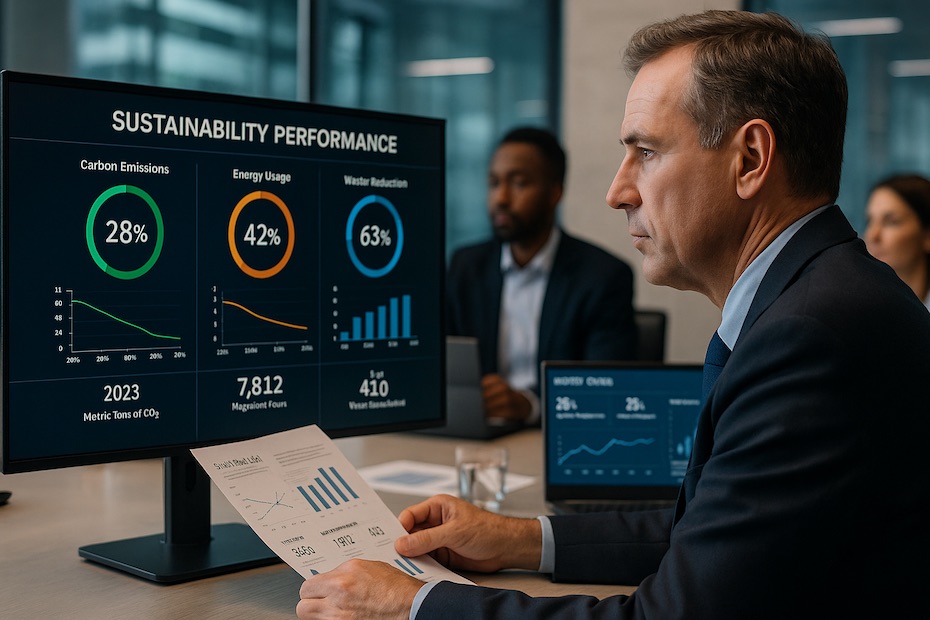
“Reducing emissions” is not a plan. You need quantifiable targets like “Cut Scope 1 and 2 emissions by 30% within 24 months.” Research from the World Resources Institute shows that companies with defined sustainability KPIs are 2.5x more likely to meet their ESG goals.
Track performance monthly. Report annually. Use emissions intensity, energy usage, waste diversion, and supplier compliance as your main indicators. Without real metrics, you’re operating in the dark.
5. Overlooking Employee Engagement
Without team buy-in, nothing sticks.
Your sustainability goals won’t survive if employees don’t understand them—or don’t believe in them. Capgemini reports that 67% of sustainability initiatives fail due to poor internal alignment. You need to train, motivate, and recognize the people implementing these goals every day.
Make sustainability a visible part of onboarding, operations, and culture. Set up sustainability committees. Offer incentives tied to impact. Empower your workforce to be stakeholders, not spectators.
6. Skipping Stakeholder and Materiality Assessments
You can’t prioritize everything—so focus on what truly matters.
A materiality assessment helps you identify the ESG issues most relevant to your business and its stakeholders. Ignoring this process leads to irrelevant reporting, wasted resources, and poor alignment with investor and customer expectations. Many companies mistakenly focus on low-impact efforts while missing high-priority risks like emissions, water use, or labor rights.
Engage employees, customers, suppliers, regulators, and investors in materiality surveys. This sharpens your ESG strategy and ensures accountability in areas that drive impact.
7. Underestimating the Cost and Commitment
Sustainability isn’t cheap—and that’s okay if you plan accordingly.
Businesses often fail because they overpromise and underfund. Implementing clean tech, revising logistics, or gaining certifications takes time and capital. But the ROI is real. McKinsey found that sustainable supply chains are 15–20% more cost-efficient over five years.
Be upfront about costs. Phase your rollout. Allocate sufficient budget. Start with initiatives that offer both environmental impact and business returns—like energy efficiency upgrades or waste reduction programs.
Performance Gaps to Watch For
If you want to build a sustainability strategy that actually delivers, avoid these traps:
- Using sustainability as a brand veneer rather than a business function
- Making environmental claims without data, certification, or methodology
- Ignoring supply chain accountability and vendor compliance
- Failing to define, track, and communicate measurable ESG KPIs
- Expecting employee buy-in without education or engagement
- Publishing irrelevant ESG reports disconnected from stakeholder priorities
- Assuming sustainability should be easy or cheap without planning for ROI
Top sustainability pitfalls businesses must avoid
- Treating it as a marketing gimmick
- Using vague environmental claims
- Overlooking supply chain impact
- Failing to track progress
- Skipping stakeholder input
- Lacking employee engagement
- Underestimating costs
In Conclusion
Building a sustainable business isn’t about looking good—it’s about running better. You need measurable targets, operational alignment, and honest accountability across your value chain. Engage employees, listen to stakeholders, and track real impact. Avoid these seven common mistakes, and you’ll not only meet ESG goals—you’ll outperform competitors who treat sustainability as a trend.

Lee Fondiller is a seasoned operations executive with over 20 years of experience in technology and sustainability. As COO of Solar4Pools, he leads innovation in the renewable energy industry with a focus on solar-powered solutions.