
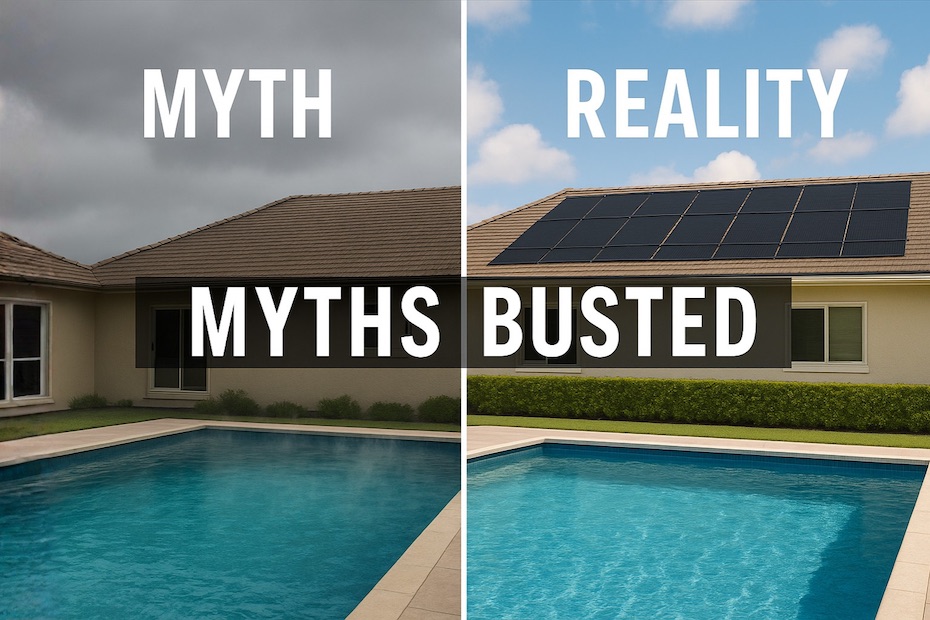
Many homeowners believe solar pool heating is expensive, ineffective in cloudy weather, and requires constant maintenance, but these are common myths that prevent people from enjoying the benefits of this proven technology. Solar pool heating is actually a cost-effective, reliable, and low-maintenance solution that can extend your swimming season significantly.
As a pool heating expert with over two decades of experience installing and servicing solar systems, I’ve heard every misconception in the book. This guide will debunk the five most persistent myths with real-world data, expert analysis, and actual user experiences to help you make an informed decision about your pool’s heating needs.
Myth #1: Solar Pool Heaters Don’t Work in Cloudy or Cool Weather
This is the most widespread myth about solar pool heating, and it’s completely false. Modern solar collectors are designed to absorb solar radiation, not just direct sunlight. Even on overcast days, your solar collectors continue absorbing ambient solar energy and transferring it to your pool water [1].
Real user data from San Diego shows that solar systems work effectively even during unseasonably cold periods. One homeowner reported their pool went from 50°F to mid-70s in just five days during a cold spell, with the system running only eight hours per day [2]. The key is understanding that solar collectors capture diffuse solar radiation that penetrates cloud cover.
The science behind this is straightforward. Solar collectors are engineered with dark absorber surfaces that capture both direct and indirect solar radiation. When sunlight hits clouds, it doesn’t disappear – it gets scattered and diffused. Your solar collectors can still harness this energy, though at reduced efficiency compared to bright sunny days. A properly sized system accounts for these variations in solar availability.
Temperature control systems make modern solar heating even more effective in variable weather. Most systems include automation that only activates when the solar collector temperature exceeds the pool temperature by at least 5°F. This prevents the system from cooling your pool during genuinely cold, cloudy conditions while maximizing heat gain when conditions are favorable.
The seasonal performance data from real users demonstrates this capability. An Orlando homeowner reports their system works effectively from two months after the winter solstice until two months before it – roughly March through Halloween. During the four-month winter period, the sun angle is too low for optimal performance, but the system still provides some heating benefit during sunny winter days [2].
Myth #2: Solar Pool Heating Systems Are Too Expensive
The upfront cost concern is understandable, but it ignores the total cost of ownership picture. Solar pool heating systems typically cost between $3,000 and $7,000 for installation, but they have virtually zero operating costs after that initial investment [2].
Compare this to gas heating, which can cost $20 per day to maintain a pool at 88°F during winter months. One Reddit user reported a $700 gas bill for just two months of pool heating [2]. Over a typical 10-year period, gas heating can cost $15,000 to $25,000 in fuel costs alone, not including equipment replacement.
Solar systems pay for themselves remarkably quickly. With operating costs of just $10 to $25 per month (primarily for the small increase in pump electricity), most systems achieve payback in three to five years [2]. After that, you’re essentially heating your pool for free for the remaining 15 to 20 years of the system’s lifespan.
The durability factor makes solar even more cost-effective. Gas heaters typically need replacement every five to ten years, while quality solar collectors often come with 10 to 12-year warranties and frequently provide reliable service for two decades or more. When you factor in equipment longevity, solar heating becomes the clear winner financially.
Regional variations in energy costs significantly impact the economic equation. In areas with expensive electricity like California, the savings are even more dramatic. A San Diego homeowner reports daily operating costs of just $2.50 for their solar system, even with premium electricity rates. This compares favorably to gas heating costs that can exceed $40 per day during peak usage periods.
The investment perspective becomes even more attractive when you consider property value increases. Solar pool heating systems are viewed as desirable amenities by potential home buyers, often adding more to property values than their installation cost. Real estate professionals report that energy-efficient pool heating is increasingly important to buyers concerned about ongoing operating expenses.
Myth #3: Solar Pool Heaters Require Constant Maintenance
This myth likely stems from confusion with other pool equipment or older solar technologies. Modern solar pool heating systems are remarkably simple and require minimal maintenance. The system consists of collectors, a pump, valves, and a controller – with very few moving parts that can fail [1].
The collectors themselves are incredibly durable and require virtually no maintenance beyond occasional cleaning. They’re designed to withstand harsh weather conditions, including hail, wind, and snow. Quality collectors feature factory-welded connections between PVC manifolds and absorbers, creating seamless panels resistant to moisture, dust, and storms [3].
Routine maintenance is minimal and straightforward. You should visually inspect collectors periodically for debris and check plumbing connections for leaks. Most systems provide years of trouble-free operation with just this basic care. The pump and controller are the only mechanical components, and they’re generally very reliable with typical lifespans of seven to ten years.
One Florida homeowner reported zero maintenance issues after installation, with the system automatically heating and cooling the pool as needed. The automation handles temperature control without any user intervention, and the system has operated flawlessly for years [2].
The simplicity of solar pool heating becomes apparent when compared to other heating methods. Gas heaters require regular service for burner cleaning, heat exchanger maintenance, and safety system checks. Heat pumps need refrigerant service, compressor maintenance, and regular filter changes. Solar systems have none of these requirements.
Seasonal maintenance is equally straightforward. In climates where pools are closed for winter, solar systems require no special winterization procedures. The collectors are designed to handle freezing temperatures without damage, and most systems include automatic drain-back features that prevent freeze damage to plumbing components.
Myth #4: Solar Panels Will Damage My Roof
This concern is valid but unfounded with proper installation. Modern solar pool heating systems are specifically designed for roof mounting without causing damage. The collectors are lightweight – typically weighing only about 60 pounds for a complete panel – and use mounting systems that distribute weight evenly across roof structures [2].
Professional installers use minimal roof penetrations and seal them with high-quality materials to prevent leaks. The mounting hardware attaches directly to roof sheathing or structural members, following building codes and manufacturer specifications. Reputable installers provide workmanship warranties covering any roof-related issues.
Solar collectors can actually protect your roof from UV damage and weather exposure. The panels shield shingles from direct sunlight, potentially extending roof life. The collectors themselves are engineered to handle extreme weather conditions that would damage conventional roofing materials.
Installation techniques have improved significantly over the years. Modern clamp-style mounting systems, like those used by premium manufacturers, eliminate the need for straps or excessive roof penetrations. These systems provide secure attachment while minimizing potential leak points and roof stress.
The weight distribution aspect is often misunderstood. Solar pool heating collectors distribute their weight over large areas, typically resulting in less than two pounds per square foot of additional roof loading. This is well within the design capacity of standard residential roof structures and is often less than the weight of a second layer of shingles.
Professional installation includes thorough roof assessment before mounting. Qualified installers evaluate roof condition, structural capacity, and optimal placement for both performance and aesthetic considerations. They also coordinate with roofing professionals when necessary to ensure proper integration with existing roof systems.
Myth #5: Solar Heaters Take Too Long to Heat a Pool
This myth contains a grain of truth but misses the bigger picture. Solar heaters don’t heat pools as quickly as gas heaters, but they excel at maintaining consistent, comfortable temperatures throughout the swimming season. The comparison isn’t entirely fair – gas heaters are designed for rapid heating, while solar systems provide steady, sustained warmth.
Real-world performance data shows impressive heating capabilities. A Canadian DIY solar system owner reports consistent 6°F temperature increases on sunny days, with the system handling all but the first and last few weeks of the swimming season [2]. In Florida, users report 7-8°F daily temperature increases with professional systems.
The key is understanding solar heating strategy. Rather than heating from cold to swimming temperature in one session, solar systems gradually raise and maintain pool temperature over time. A properly sized system typically increases pool temperature by 10-15°F above an unheated pool, which is sufficient for comfortable swimming in most climates [1].
Initial heating does take longer, but maintenance heating is efficient and cost-effective. Once your pool reaches the desired temperature, the solar system only needs to run a few hours daily to maintain that warmth. Using a pool cover dramatically improves performance by preventing overnight heat loss.
The heating speed comparison reveals interesting patterns. Gas heaters can raise pool temperature by 20°F in 24-36 hours but at monthly costs of $295-$625. Solar systems achieve the same 20°F increase in 3-4 days at monthly costs of just $27-$127 [3]. The slightly longer heating time is offset by dramatically lower operating costs.
Performance optimization techniques can improve heating speed. Proper system sizing, strategic use of pool covers, and timing system operation for peak solar hours all contribute to faster heating. Many users report that once they understand their system’s patterns, they can achieve desired temperatures efficiently and predictably.
How Much Can I Realistically Expect to Heat My Pool?
Solar pool heating performance depends on several factors, but you can expect realistic temperature increases of 10-15°F above an unheated pool with a properly sized system. The exact performance varies based on your location, system size, and pool characteristics.
Geographic location plays a major role in system performance. Southern climates with abundant sunshine can achieve higher temperature increases and longer heating seasons. A Florida user reports maintaining pool temperatures in the 90s during peak season, while northern users typically see more modest but still significant improvements.
System sizing is critical for optimal performance. The general rule is that collector area should equal 50-100% of your pool’s surface area, depending on your climate and desired temperature increase. Larger collector arrays provide more heating capacity but also increase initial costs.
Pool covers dramatically improve solar heating effectiveness. Covering your pool when not in use prevents evaporative heat loss, which is the primary way pools lose heat. Users report that covers can double the effectiveness of their solar heating systems by retaining the heat generated during sunny periods.
Climate considerations affect performance expectations significantly. In sunny climates like Arizona or Florida, properly sized systems can maintain comfortable swimming temperatures from early spring through late fall. In northern climates, solar heating extends the swimming season by several months but may not provide year-round swimming capability.
Pool characteristics also influence heating performance. Darker pool surfaces absorb more solar energy, while lighter surfaces reflect heat. Pool depth affects heating time, with shallower pools heating faster than deeper ones. Wind exposure increases heat loss through evaporation, making pool covers even more important in windy locations.
What’s the Real Cost and Payback Period?
The economics of solar pool heating are compelling when you examine the complete financial picture. Installation costs range from $3,000 for basic systems to $10,000 for premium installations with automation and multiple zones. Operating costs are minimal, typically $10-25 monthly for increased pump operation.
Payback periods are impressively short compared to other home improvements. Most systems pay for themselves in 3-5 years through energy savings alone. After payback, you enjoy essentially free pool heating for the remaining 15-20 years of system life.
Regional electricity costs significantly impact payback calculations. Areas with expensive electricity, like California, see faster payback periods. A San Diego user reports daily operating costs of just $2.50 even with premium electricity rates, compared to much higher costs for gas or electric heating alternatives [2].
Long-term value extends beyond energy savings. Solar heating systems increase property values and provide decades of reliable service. Unlike gas heaters that require regular replacement, quality solar systems often outlast the pools they serve.
Financing options can improve the investment equation. Many solar installers offer financing programs that allow monthly payments lower than typical gas heating costs. This means you can start saving money immediately while building equity in a permanent home improvement.
Tax incentives may apply to solar pool heating installations in some jurisdictions. While federal tax credits typically don’t cover pool heating, some states and local utilities offer rebates or incentives for solar thermal installations. Check with local authorities and utility companies for available programs.
How Do I Find a Reputable Solar Pool Heating Installer?
Choosing the right installer is crucial for system performance and longevity. Look for companies with extensive experience specifically in solar pool heating, not just general solar or pool contractors. Ask for local references and inspect completed installations in your area.
Proper licensing and insurance are non-negotiable requirements. Verify that installers carry appropriate contractor licenses for your state and maintain adequate liability insurance. Request certificates of insurance and verify coverage directly with insurance providers.
Quality installations include comprehensive warranties covering both equipment and workmanship. Reputable installers stand behind their work with multi-year warranties and provide ongoing service support. Avoid contractors who offer only manufacturer warranties without workmanship coverage.
Get multiple quotes and compare system designs, not just prices. The lowest bid often indicates corners being cut in equipment quality or installation practices. Focus on value and long-term performance rather than initial cost alone.
Professional installers should provide detailed system sizing calculations based on your pool dimensions, local climate data, and performance goals. They should also explain system operation, maintenance requirements, and expected performance in your specific situation.
References from recent customers provide valuable insights into installer quality and customer service. Contact multiple references and ask about installation experience, system performance, and any issues that arose. Quality installers welcome reference checks and provide multiple contacts willingly.
Understanding Different Types of Solar Collectors
Solar pool heating systems use different collector technologies, each with specific advantages and applications. Understanding these differences helps you make informed decisions about system design and performance expectations.
Unglazed collectors are the most common type for pool heating applications. These collectors consist of black plastic or rubber absorber materials without glass covers. They’re cost-effective, lightweight, and well-suited for pool heating where high temperatures aren’t required. Most residential pool heating systems use unglazed collectors.
Glazed collectors feature glass covers over the absorber surfaces, providing higher efficiency and the ability to reach higher temperatures. They’re more expensive than unglazed collectors but may be appropriate for applications requiring year-round heating in cooler climates or for spa heating where higher temperatures are desired.
Collector materials vary in durability and performance characteristics. Polypropylene collectors offer excellent chemical resistance and longevity, making them popular for residential applications. EPDM rubber collectors are flexible and easy to install but may have shorter lifespans. Premium collectors feature UV-resistant formulations and reinforced construction for maximum durability.
Mounting options affect both performance and aesthetics. Roof-mounted systems are most common and efficient, taking advantage of optimal sun exposure and existing roof space. Ground-mounted systems may be appropriate where roof mounting isn’t feasible, though they typically require more space and may have reduced performance due to shading or suboptimal orientation.
Common Installation Mistakes to Avoid
Understanding potential installation pitfalls helps ensure your solar pool heating system performs optimally from day one. Many performance issues stem from installation errors that could have been prevented with proper planning and execution.
Undersizing the collector array is one of the most common mistakes. Some installers recommend smaller systems to reduce costs, but this approach often leads to disappointing performance and customer dissatisfaction. A properly sized system should have collector area equal to 50-100% of pool surface area, depending on climate and performance goals.
Poor collector placement reduces system efficiency significantly. Collectors should face south when possible and be tilted at angles that optimize solar exposure for your latitude. Shading from trees, buildings, or other structures can dramatically reduce performance, making site evaluation crucial during system design.
Inadequate plumbing design creates flow restrictions that limit heat transfer efficiency. Proper pipe sizing, minimal fittings, and smooth flow paths ensure optimal water circulation through collectors. Installers should calculate pressure drops and pump requirements to maintain adequate flow rates throughout the system.
Improper control system setup prevents optimal operation. Temperature sensors must be positioned correctly, and control parameters should be adjusted for local conditions and user preferences. Many systems underperform simply because controls aren’t properly configured during installation.
Maximizing Your Solar Pool Heating Investment
Getting the most from your solar pool heating system requires understanding how to optimize its operation and integrate it with other pool equipment and practices.
Pool covers are the single most important accessory for solar heating systems. Covering your pool when not in use prevents evaporative heat loss, which accounts for 70% of pool heat loss in most climates. Quality covers can double the effectiveness of your solar heating system and dramatically reduce heating time.
Timing system operation for peak solar hours maximizes heat gain. Most systems should operate during midday hours when solar radiation is strongest. Automated controls can optimize this timing, but manual operation allows fine-tuning for specific conditions and preferences.
Regular system monitoring helps identify performance issues early. Keep track of temperature increases on sunny days and note any changes in performance patterns. Most problems are easily corrected when caught early, but can become expensive if allowed to persist.
Integration with other heating methods provides backup capability for extended seasons or rapid heating when needed. Many homeowners combine solar heating with gas or heat pump backup for maximum flexibility and year-round swimming capability.
Proper water chemistry maintenance protects system components and ensures optimal heat transfer. Balanced water prevents scale buildup in collectors and plumbing, maintaining peak performance throughout the system’s life. Regular testing and adjustment of pH, alkalinity, and sanitizer levels are essential.
Your Quick Guide to Solar Pool Heating Myths
Myth: Solar heaters don’t work in cloudy weather. Fact: Modern systems capture diffuse solar radiation even on overcast days.
Myth: Solar heating is too expensive. Fact: Systems pay for themselves in 3-5 years with 15-20 year lifespans.
Myth: Solar systems require constant maintenance. Fact: Minimal maintenance needed – just periodic cleaning and visual inspections.
Myth: Solar panels damage roofs. Fact: Professional installation protects roofs and panels weigh only 60 pounds.
Myth: Solar heating is too slow. Fact: Systems provide 10-15°F increases and excel at maintaining comfortable temperatures.
The Bottom Line on Solar Pool Heating
Don’t let persistent myths prevent you from exploring one of the most cost-effective and environmentally friendly pool heating options available. Modern solar pool heating technology is proven, reliable, and financially attractive for most pool owners. The combination of minimal operating costs, long equipment life, and consistent performance makes solar heating an excellent investment that pays dividends for decades. With proper system sizing and professional installation, you can enjoy extended swimming seasons while dramatically reducing your pool heating costs and environmental impact.

Lee Fondiller is a seasoned operations executive with over 20 years of experience in technology and sustainability. As COO of Solar4Pools, he leads innovation in the renewable energy industry with a focus on solar-powered solutions.